AI Marketing
Gushwork or OmniSEO? One Measures AI Visibility While the Other Tries to Build It
Gushwork and OmniSEO both help brands appear in AI search, but they solve the problem very differently. OmniSEO shows where a brand is missing and what to target next. Gushwork goes further into execution, publishing and lead generation – at a much higher starting price.
Gushwork vs OmniSEO is not a conventional comparison between two identical GEO dashboards. Both products help businesses understand how they appear across AI-driven discovery channels, but the similarities become much smaller once the workflow moves from diagnosis to execution.
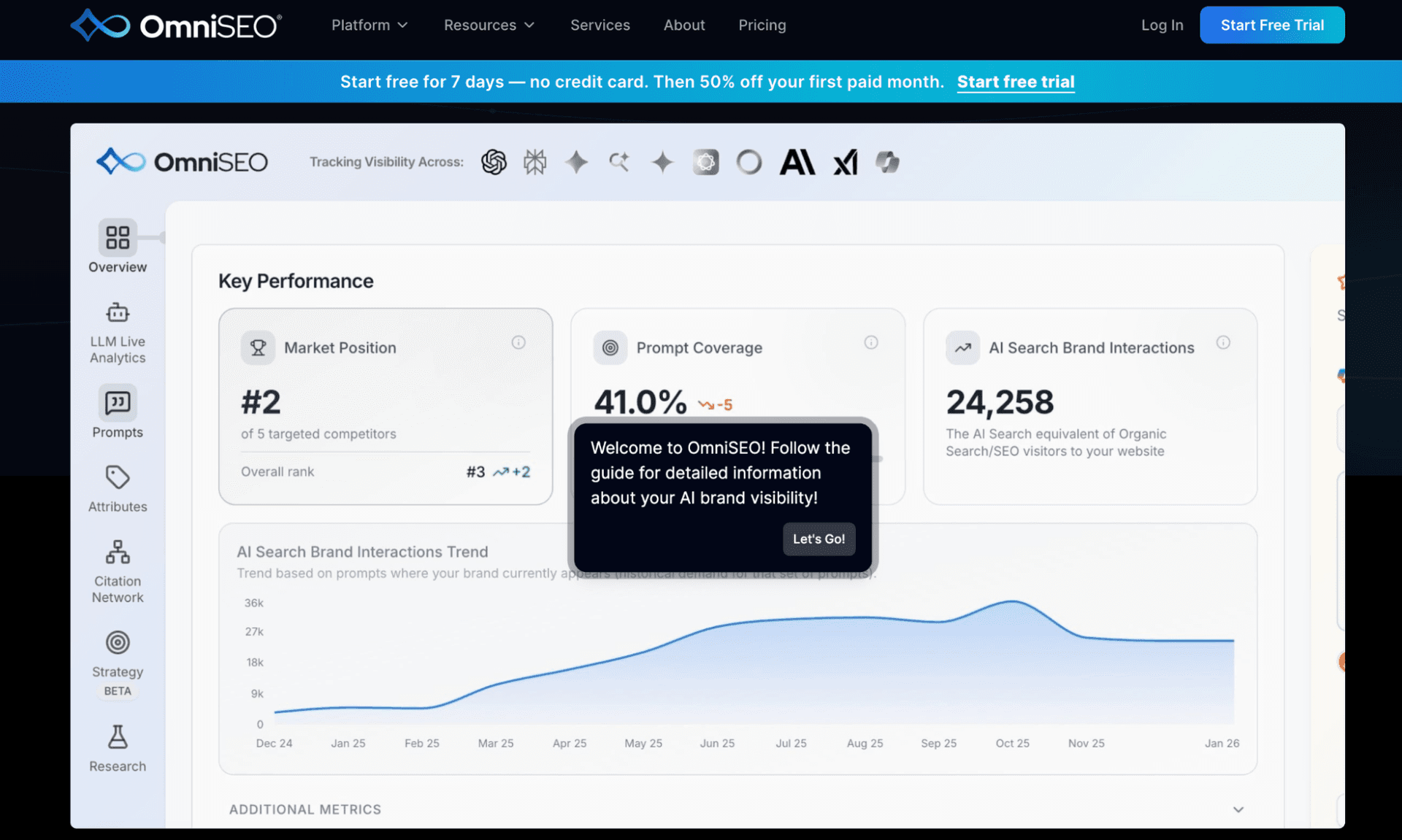
OmniSEO is primarily an AI visibility platform. It tracks prompts, brand mentions, citations, competitors and placement opportunities across systems such as ChatGPT, Google AI Overviews, Perplexity, Gemini, Claude, Copilot, Grok, Meta AI and DeepSeek, depending on the plan. It is designed for marketers and SEO teams that want visibility data and clear recommendations while keeping control of their own content and optimization process.
Gushwork is much closer to an outsourced AI-search growth system. Its current product combines research, strategy, content creation, AI-optimized publishing, authority building, analytics, lead capture and ongoing page refreshes. The company explicitly targets sales-led B2B businesses that want search visibility to produce quote requests, consultation calls and qualified inbound leads.
Choose OmniSEO when the business needs to measure AI visibility and decide what to optimize. Choose Gushwork when the business wants a system that also executes much of the optimization and publishing work.
That difference is the foundation of the Gushwork vs OmniSEO comparison.
Gushwork vs OmniSEO at a Glance
Gushwork vs OmniSEO becomes much easier to understand when the tools are compared by what the customer is actually buying. OmniSEO sells visibility intelligence as software. Gushwork sells a broader search-growth system combining software, automation and done-for-you execution.
OmniSEO tells an internal marketing team where AI visibility can improve. Gushwork is designed to take responsibility for more of what happens after that diagnosis.
| **Feature** | **Gushwork** | **OmniSEO** |
|---|---|---|
| Primary product | AI search growth and lead-generation system | AI visibility tracking and GEO/AEO platform |
| AI visibility tracking | Yes | Yes |
| ChatGPT monitoring | Yes | Yes |
| Perplexity monitoring | Yes | Yes |
| Gemini / Google AI tracking | Yes | Yes |
| Claude tracking | Yes | Yes on Professional+ |
| Grok tracking | Yes | Yes on Professional+ |
| DeepSeek tracking | Not a primary published focus | Yes on Professional+ |
| Competitor visibility | Yes | Yes |
| Prompt research | Yes | Yes |
| Prompt query volume | Research / buyer-intent discovery | Dedicated PQV metric |
| Citation analysis | Yes | Yes |
| AI crawler analytics | Yes | Less central |
| Content-gap identification | Yes | Yes |
| Content generation | Major product function | Recommendations rather than primary execution |
| Direct publishing | Yes | No comparable core publishing engine |
| AI-native CMS / Feed | Yes | No |
| Backlink / authority work | Included in growth system | Recommendations / services separate |
| Lead tracking | Yes | Not the core platform purpose |
| Buyer journey tracking | Yes | No comparable core workflow |
| Self-service software | Less central | Yes |
| Entry pricing | From $900/month | From $89/month |
| Best fit | Sales-led B2B needing execution | Teams needing AI-search intelligence |
Gushwork vs OmniSEO Across the GEO Workflow
The largest Gushwork vs OmniSEO difference appears when both platforms are mapped against a complete GEO or AEO workflow. OmniSEO is strongest from research through measurement and prioritization. Gushwork continues into content production, publishing, authority building and lead attribution.
This makes the products fundamentally different purchases. OmniSEO can sit inside an existing SEO department. Gushwork is designed to replace a larger portion of the work that department or agency would otherwise perform.
| **GEO Task** | **Gushwork** | **OmniSEO** |
|---|---|---|
| Discover buyer questions | Yes | Yes |
| Measure AI visibility | Yes | Yes |
| Track prompts | Yes | Yes |
| Benchmark competitors | Yes | Yes |
| Identify content gaps | Yes | Yes |
| Analyze citations | Yes | Yes |
| Recommend next opportunities | Yes | Yes |
| Generate optimized pages | Yes | Not core platform execution |
| Publish pages | Yes | No comparable automated CMS layer |
| Structured AI-ready content | AI Feed | Recommendations / optimization workflow |
| Build authority signals | Yes | Platform guidance / managed services separately |
| Refresh pages automatically | Yes | Tracking and recommendations |
| Track human traffic | Yes | AI visibility focus |
| Track AI bot crawling | Yes | AI-search analytics focus |
| Track leads from content | Yes | Not the primary workflow |
Gushwork vs OmniSEO for AI Visibility Tracking
Both platforms can show whether a brand appears in AI-generated answers, but OmniSEO offers the more conventional specialist visibility-tracking product.
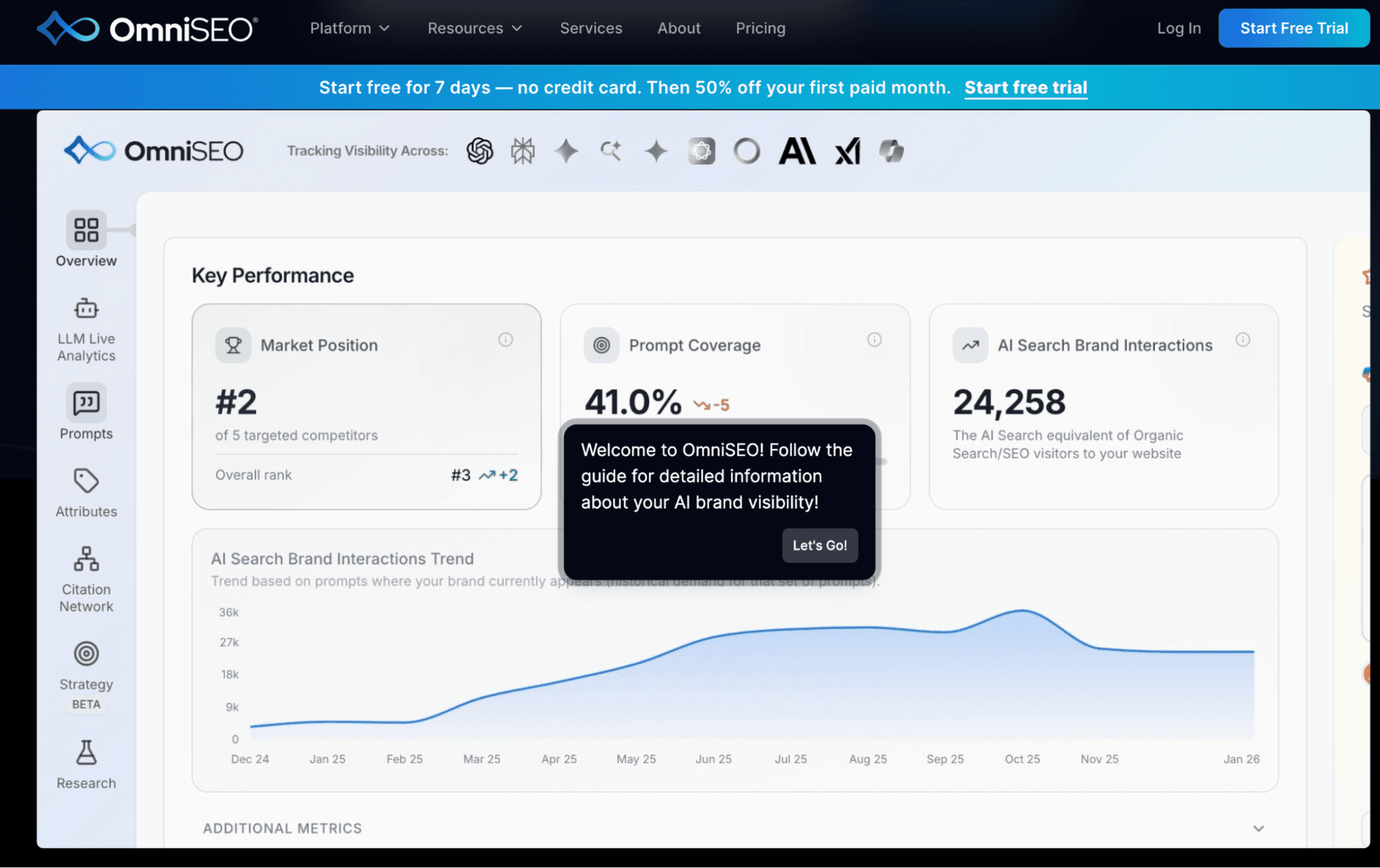
OmniSEO tracks brand mentions, placements, citations and competitors across multiple AI answer engines. Its Essentials plan covers four channels: Google AI Overviews, Google AI Mode, ChatGPT and Perplexity. Professional expands coverage to ten, adding Gemini, Copilot, Claude, Meta AI, Grok and DeepSeek. Teams can save prompts and monitor how brand visibility changes over time.
Gushwork also tracks AI visibility, mentions and citations. Its Analytics product combines AI information with traditional website data, including human visitors, page views, rankings, leads and AI-bot activity. The earlier AI Visibility Suite also introduced AI Presence Tracker, Citation Profile and AI Query Insights around ChatGPT, Gemini, Perplexity and other models.
For a marketer who mainly wants an AI visibility dashboard, OmniSEO is the more focused product. Gushwork collects visibility data partly to decide what its wider growth system should build or change next.
| **Tracking Need** | **Gushwork** | **OmniSEO** |
|---|---|---|
| Brand mentions in AI answers | Yes | Yes |
| Competitor comparison | Yes | Yes |
| Citation tracking | Yes | Yes |
| Sentiment / brand context | Yes | Yes |
| Saved prompt monitoring | Yes through research system | Core product metric |
| Visibility score | Yes | Yes |
| AI bot website visits | Yes | Less central |
| Traditional keyword ranking | Yes | AI-search focus |
| Human traffic | Yes | Not primary |
| Lead attribution | Yes | Not primary |
Gushwork vs OmniSEO for ChatGPT, Gemini and Perplexity
OmniSEO currently provides the clearer published engine-by-engine tracking structure. Essentials covers ChatGPT, Perplexity and Google's AI experiences, while Professional expands monitoring across a ten-platform set that includes Gemini, Claude, Copilot, Meta AI, Grok and DeepSeek.
Gushwork's AI search system explicitly targets discovery through ChatGPT, Gemini, Perplexity, Claude and Grok, alongside Google. Its product is less focused on selling a fixed number of monitored engines and more focused on getting pages understood, cited and recommended across AI-driven discovery.
That distinction matters. A company comparing its share of voice across ten answer engines every month will likely prefer OmniSEO's explicit channel structure. A manufacturer primarily concerned with whether buyers asking ChatGPT or Gemini for suppliers can actually discover its products may care more about the execution layer behind Gushwork.
Gushwork vs OmniSEO is therefore not simply five engines versus ten. It is optimization execution versus monitoring granularity.
Gushwork vs OmniSEO for Prompt Research
Prompt research is a central feature in both products, but OmniSEO has turned it into a particularly structured self-service workflow.
OmniSEO Prompt Explorer can search by a brand domain, competitor domain or topic. It identifies prompts people ask AI systems, indicates whether existing content covers them, shows which competitors receive citations and attaches Prompt Query Volume to help prioritize opportunities.
PQV is one of OmniSEO's most distinctive metrics. It estimates how often a prompt or topic is asked across AI environments, giving marketers an AI-search equivalent to conventional keyword volume. The platform also shows trend data and helps separate informational topics from commercial prompts where AI systems compare vendors.
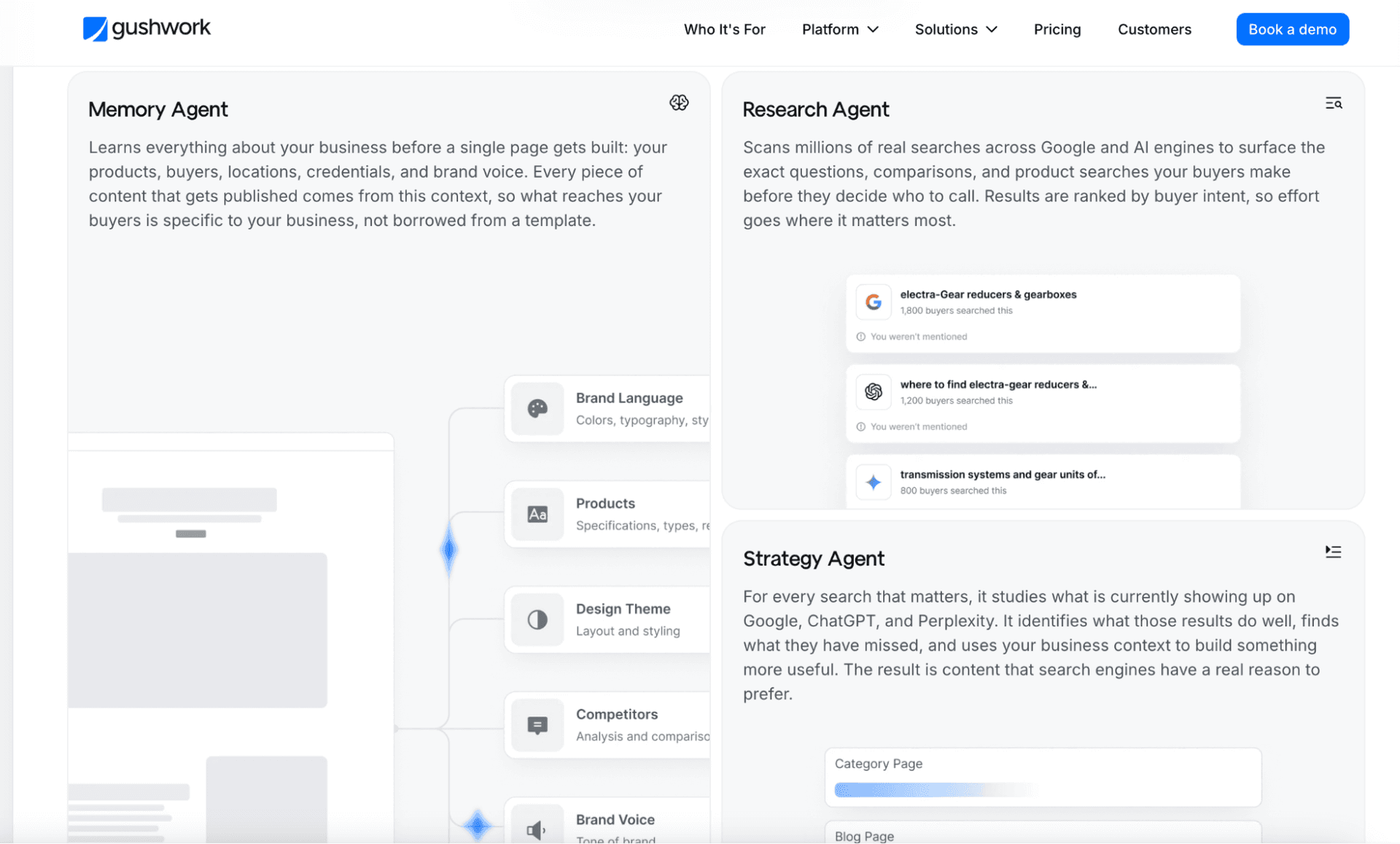
Gushwork's Research Agent takes a broader execution-oriented approach. It maps the questions, comparisons, product categories, locations and use cases buyers search before contacting a business, then passes those opportunities into the strategy and content system.
OmniSEO is stronger when a strategist wants to explore and prioritize prompts manually. Gushwork is stronger when the business wants those findings automatically converted into an execution queue.
| **Research Capability** | **Gushwork** | **OmniSEO** |
|---|---|---|
| Discover AI buyer questions | Yes | Yes |
| Search competitor gaps | Yes | Yes |
| Commercial-intent research | Yes | Yes |
| Prompt demand metric | Research prioritization | Dedicated PQV |
| Prompt trends | Used in strategy | Yes |
| Content-gap identification | Yes | Yes |
| Competitors cited per prompt | Yes | Yes |
| Immediate self-service exploration | Less central | Strong |
| Convert prompt directly into new page | Yes through content system | Requires execution outside core tracker |
Gushwork vs OmniSEO for Citation Tracking
Citations matter because a brand can be mentioned in an AI answer without its own website being used as a source. Both Gushwork and OmniSEO try to show not only whether the brand appears but what information AI engines are relying on.
OmniSEO Citation Analytics maps where a brand or page is cited across tracked queries and platforms. Its platform can show the answer, cited sources and competitive context, helping an SEO team identify pages that already earn citations and topics where another domain is being used instead.
Gushwork's Citation Profile follows a similar diagnostic principle but connects it to a wider authority-building workflow. The platform identifies which resources AI models reference and then combines that information with content, backlinks, citations and structured pages designed to strengthen authority.
The difference follows the wider Gushwork vs OmniSEO pattern: OmniSEO identifies the citation gap; Gushwork is designed to participate in closing it.
Gushwork AI Feed vs OmniSEO Prompt and Placement Recommendations
AI Feed is one of the clearest reasons Gushwork cannot be treated as just another visibility tracker. It creates a dedicated section on a company's existing domain or subdomain containing pages specifically structured around questions AI agents and buyers may ask.
Gushwork states that the system can publish landing pages, product pages, category pages and content pages, with each page targeting a specific buyer question. The Feed also uses structured data, schema and llms.txt infrastructure and is designed to update content as AI discovery behavior changes.
OmniSEO does not offer an equivalent publishing layer as the central SaaS product. Instead, it identifies opportunities through Prompt Research, Content Gaps, Citation Analytics, Action Plans, Quick Wins and Placement Recommendations. The marketer then decides how those recommendations are implemented, either internally or through external services.
This is perhaps the single most important functional difference in Gushwork vs OmniSEO. OmniSEO is an intelligence layer for GEO. Gushwork adds an execution and publishing layer.
| **Optimization Step** | **Gushwork AI Feed** | **OmniSEO** |
|---|---|---|
| Find prompt opportunity | Yes | Yes |
| Identify content gap | Yes | Yes |
| Prioritize opportunity | Yes | Yes |
| Recommend optimization | Yes | Yes |
| Generate page | Yes | Not core tracker function |
| Publish page | Yes | No comparable core CMS |
| Structured AI-ready HTML | Yes | Optimization guidance |
| Schema / machine-readable structure | Built into Feed | Recommendation context |
| llms.txt support | Yes | Tools / guidance available |
| Automatic refresh | Yes | Measure and recommend |
Gushwork vs OmniSEO for Competitor Analysis
Both platforms compare a brand against competitors, but the analysis serves different next steps.
OmniSEO can show which competing brands appear for the same prompts, where competitors are cited instead of the tracked brand and where competitive share of voice is stronger or weaker. Its Prompt Explorer can even begin with a competitor domain to identify prompts and content areas that competing pages cover more effectively.
Gushwork's Strategy and Research Agents also study what competitors rank or appear for and identify gaps, but this intelligence immediately feeds its page creation and authority system. The goal is not only to produce a competitor report but to identify what the platform should publish or improve.
For an experienced SEO team that already has writers, developers and outreach resources, OmniSEO's visibility data may be enough. For a lean B2B organization without those resources, Gushwork's integrated execution model is the larger differentiator.
Gushwork vs OmniSEO for Traditional SEO and Google
Neither product is limited to ChatGPT or Perplexity, but Gushwork combines traditional Google SEO and AI discovery more tightly inside one service.
Gushwork's Page Creation Engine performs keyword research, intent mapping and competitor tracking and creates content designed for both conventional search and AI crawlers. Its analytics dashboard also includes ranking tracking alongside AI mentions and crawler activity.
OmniSEO is designed specifically around AEO and GEO visibility, although Google AI Overviews and AI Mode are major tracked channels. Traditional keyword tools and broader SEO execution can still sit alongside OmniSEO, but they are not the main reason to buy the platform.
A company replacing or consolidating SEO execution may find Gushwork more relevant. A company keeping its existing SEO stack and adding an AI-search measurement layer is closer to OmniSEO's ideal workflow.
Gushwork vs OmniSEO for Recommendations
OmniSEO has a stronger self-service recommendation layer because marketers can inspect why visibility is weak and choose which action to take. Its current platform includes Action Plans, Quick Wins and Placement Recommendations organized by engine, query and topic opportunity.
The system can identify high-impact opportunities such as an uncovered prompt, weak citation health or a competitor topic where visibility appears attainable. This makes OmniSEO useful for teams that want their strategists to remain responsible for prioritization and execution.
Gushwork's recommendations are more likely to become automated actions inside the wider system. Research Agent identifies demand, Strategy Agent selects gaps, Content Agent creates pages, Authority Agent works on trust signals and Refresh Agent updates existing content.
OmniSEO puts the marketer in the driver's seat. Gushwork automates more of the journey after the decision has been made.
| **Question** | **Gushwork** | **OmniSEO** |
|---|---|---|
| What are buyers asking? | Research Agent | Prompt Research |
| Where are competitors stronger? | Strategy / research | Competitor Analysis |
| Which content is missing? | Identified automatically | Content Gaps |
| What should happen next? | Agent workflow | Action Plan / Placement Recommendation |
| Who creates the new content? | Gushwork system | Internal team / separate service |
| Who publishes it? | Gushwork | Internal CMS process |
| Who measures the result? | Gushwork Analytics | OmniSEO platform |
Gushwork vs OmniSEO Analytics
Gushwork has the broader business-performance dashboard. OmniSEO has the more specialized AI-search visibility analytics.
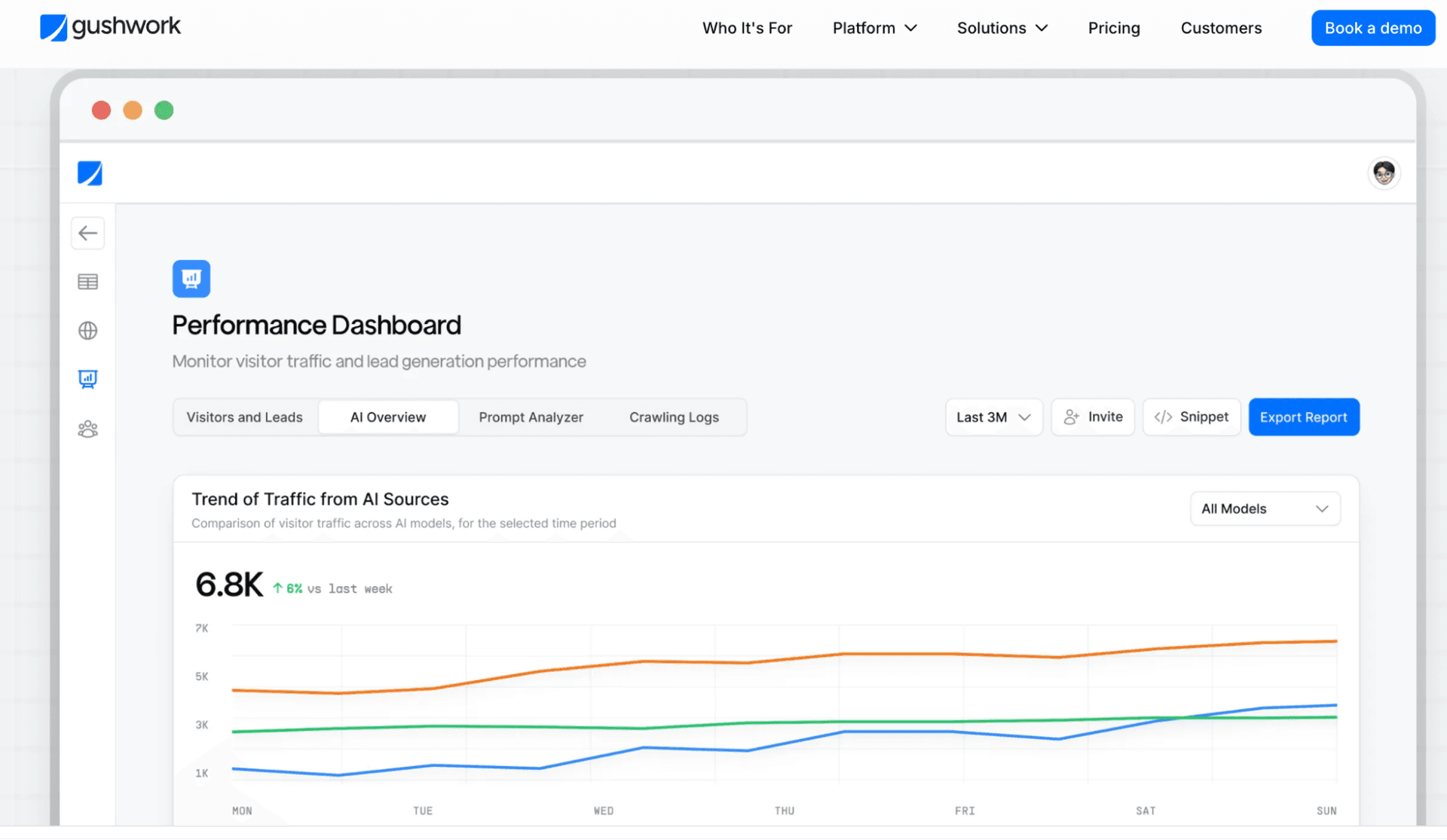
Gushwork Analytics combines human website traffic, AI bot crawling, AI mentions, keyword rankings, lead analytics and content performance. The platform can show which AI bots visit specific pages and connect content activity with inquiries and buyer journeys.
OmniSEO focuses more narrowly on AI visibility scores, prompt performance, citations, competitors and opportunities. Professional and Enterprise plans also add data-export capabilities, allowing teams to bring visibility data into reporting workflows.
A marketing director who needs to answer “Are AI engines mentioning the brand?” can use OmniSEO. A business owner asking “Did this visibility produce inquiries and what pages did those buyers read?” is closer to Gushwork's analytics model.
| **Metric** | **Gushwork** | **OmniSEO** |
|---|---|---|
| AI brand mentions | Yes | Yes |
| Citation visibility | Yes | Yes |
| Competitor visibility | Yes | Yes |
| Prompt tracking | Yes | Yes |
| AI crawler visits | Yes | Less central |
| Human website traffic | Yes | Not primary |
| Keyword rankings | Yes | Not central product |
| Content performance | Yes | AI visibility context |
| Lead volume | Yes | No comparable core metric |
| Buyer journey | Yes | No comparable core metric |
| Exportable AI reporting | Custom analytics | Professional+ exports |
Gushwork vs OmniSEO Pricing in 2026
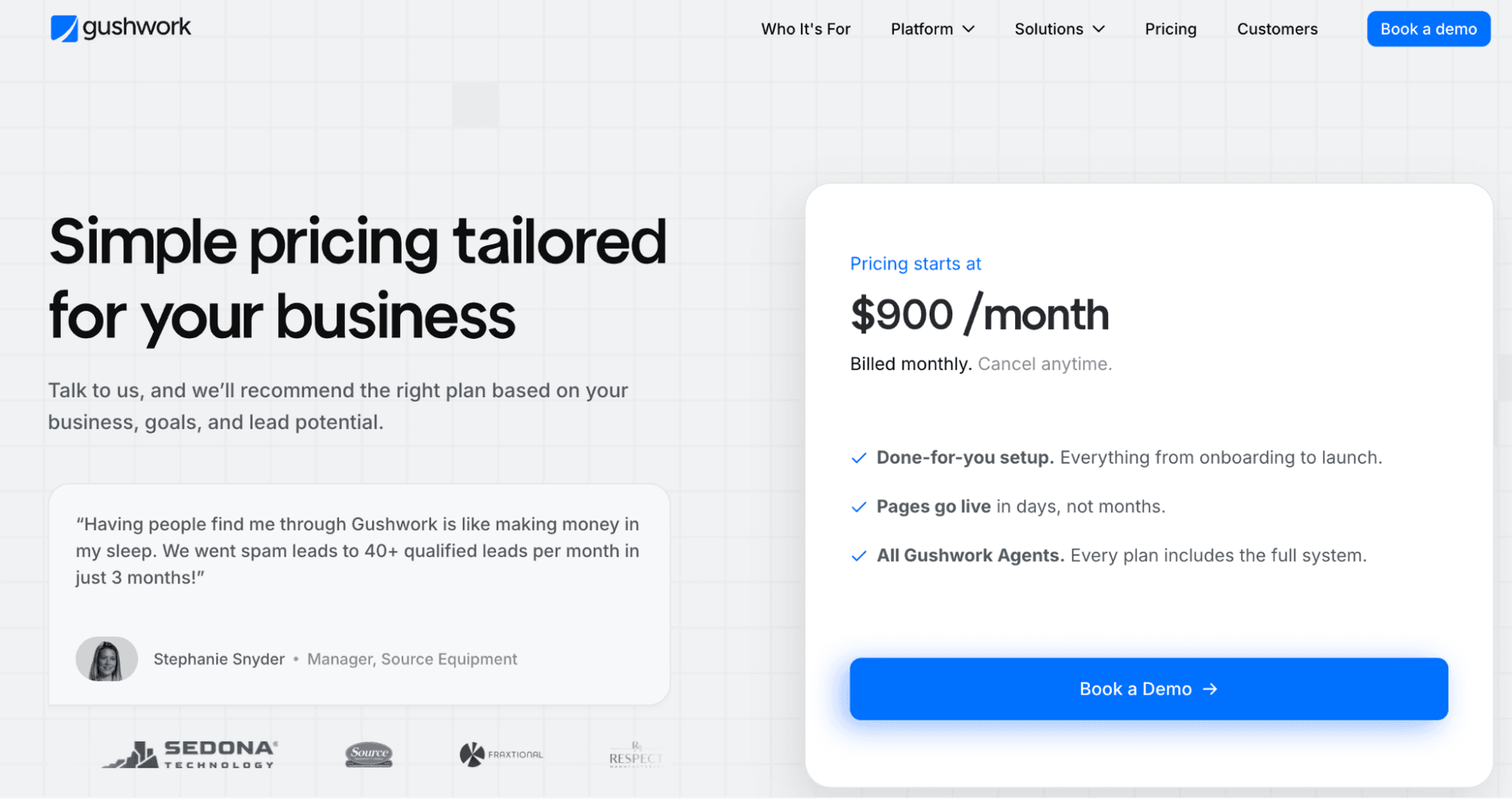
Pricing reflects how different these products actually are. OmniSEO starts as self-service SaaS at $89 per month. Gushwork currently starts at $900 per month because the package includes execution rather than visibility tracking alone.
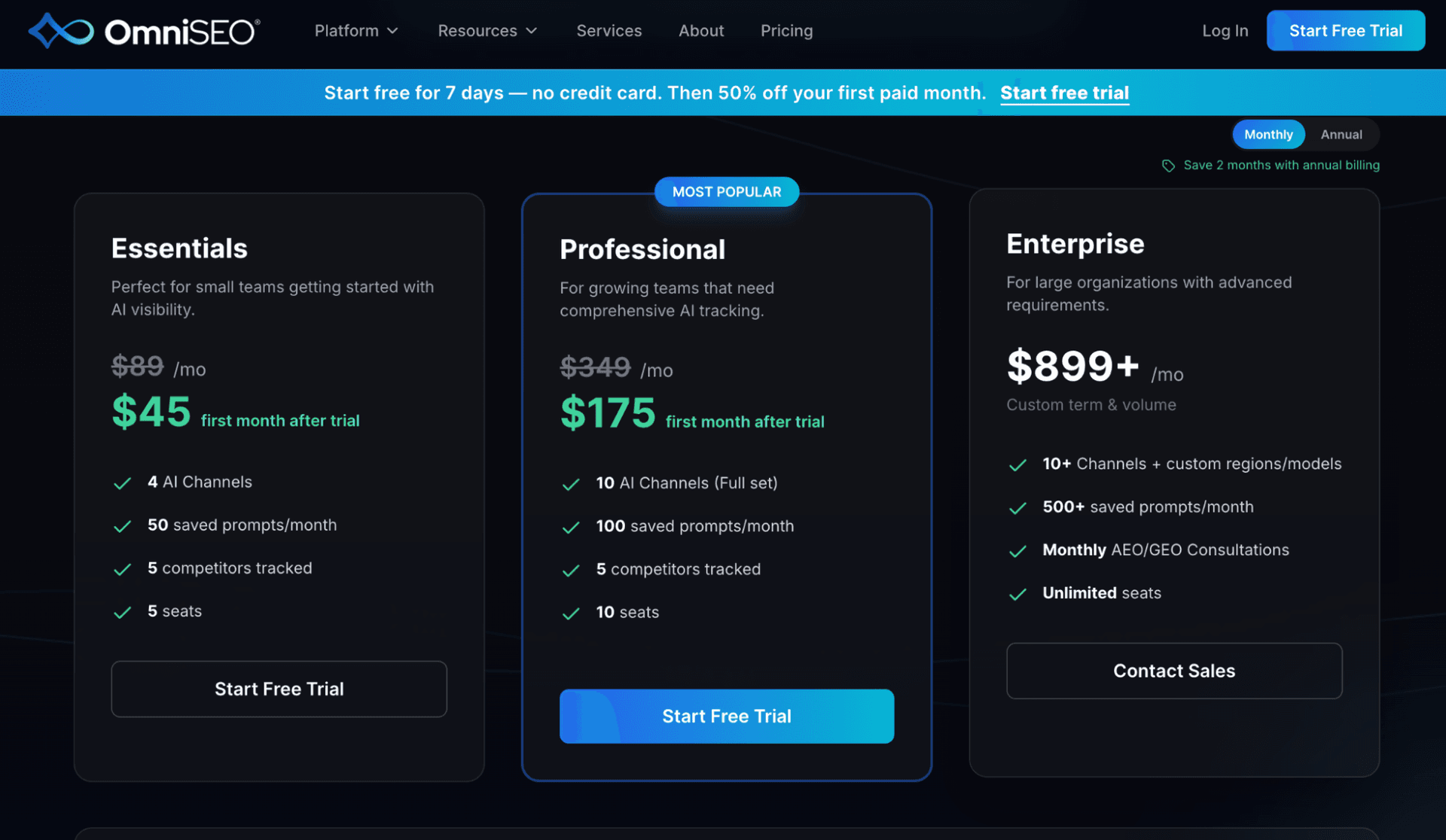
OmniSEO Essentials costs $89 per month and includes four AI channels, 50 saved prompts, five tracked competitors and five seats. Professional costs $349 per month and expands monitoring to ten AI channels, 100 saved prompts, ten seats and CSV/PDF exports. Enterprise starts at $899 per month with 500+ monitored prompts, unlimited seats, custom regions or model cohorts and additional support.
Annual OmniSEO billing costs $890 for Essentials and $3,490 for Professional, effectively providing two months free. A seven-day free trial is currently available without a credit card, initially covering ChatGPT and Google AI Overviews.
Gushwork starts at $900 per month, billed monthly, with the final cost determined by page volume, desired growth speed and additional paid support. The entry package includes the full agent system, setup, page creation, optimization, tracking and support.
The similar $899–$900 price point at the top end is misleading. OmniSEO Enterprise and entry-level Gushwork are still buying different things. OmniSEO Enterprise provides deeper measurement infrastructure. Gushwork's starting package includes execution infrastructure.
| **Plan** | **Price** | **What the Buyer Is Primarily Paying For** |
|---|---|---|
| OmniSEO Essentials | $89/month | AI visibility tracking across 4 channels |
| OmniSEO Professional | $349/month | 10-channel monitoring, more prompts, exports |
| OmniSEO Enterprise | $899+/month | Enterprise-scale tracking and support |
| Gushwork | From $900/month | Research, content, publishing, authority, analytics and lead system |
Gushwork vs OmniSEO Free Tools and Trials
OmniSEO is much easier to evaluate before paying. It currently offers a seven-day free trial with no credit card, plus several standalone free tools.
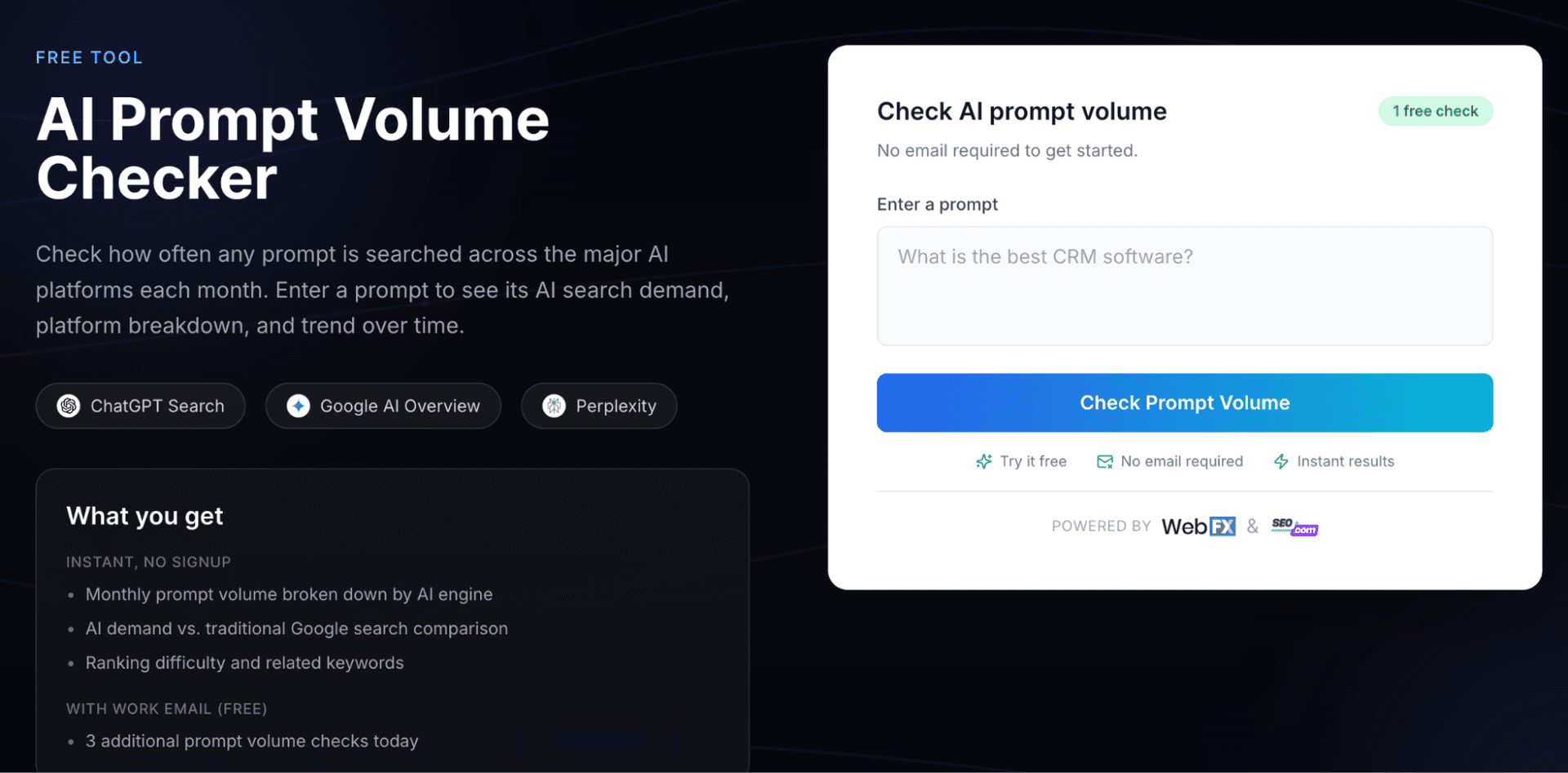
Its AI Prompt Volume Checker estimates monthly demand for individual prompts, while Brand Research analyzes how major AI platforms understand and mention a company. Prompt Explorer can also be tested through the trial before committing to a paid plan.
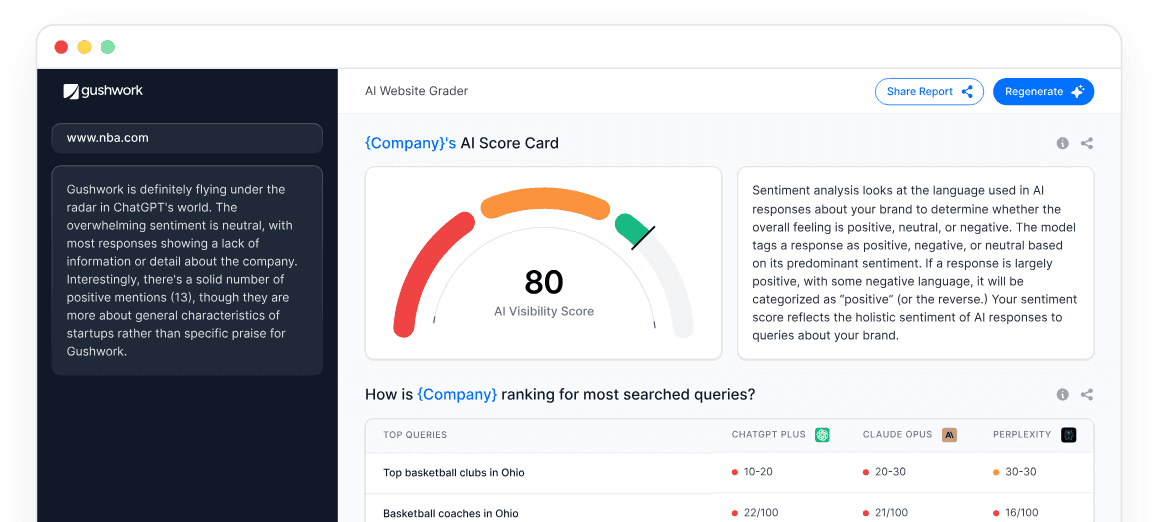
Gushwork offers a free AI Search Grader that produces an AI visibility score, competitor rankings, sentiment information and insights into how different AI systems understand a brand. The paid product, however, is sales-led and begins through consultation rather than a low-cost self-service subscription.
For a marketer who wants to experiment with GEO measurement, OmniSEO therefore has the easier testing path. For Gushwork, the free grader is more useful as a diagnostic before deciding whether the wider managed system is appropriate.
Gushwork vs OmniSEO for B2B Companies
Gushwork's current positioning is particularly specific: the platform says it works best for sales-led B2B businesses where customers typically submit quote requests, book consultations or contact sales before purchasing.
That includes businesses such as manufacturers, industrial distributors, commercial service providers and other companies where the value of one qualified inbound lead can be high. Gushwork can create hundreds of highly specific pages around products, services, industries, locations and buyer questions, then connect those pages to lead capture.
The company also explicitly states that businesses where customers purchase or sign up directly without speaking to someone first are not currently its ideal fit.
OmniSEO has a wider potential customer profile because it does not require a particular conversion model. Its platform can be used by B2B, B2C, ecommerce, SaaS and other teams that want to measure AI visibility and citations.
Gushwork is more specialized by business model. OmniSEO is more flexible as a visibility platform.
Gushwork vs OmniSEO for Ecommerce and Self-Service SaaS
OmniSEO has the more natural fit for ecommerce and self-service SaaS because those companies may need visibility intelligence without adopting Gushwork's sales-led lead-generation model.
An ecommerce SEO team can use OmniSEO to monitor product-category prompts, competitor citations, ChatGPT visibility and Google AI Overview coverage while continuing to execute product-page and content optimization internally.
Similarly, a SaaS company with an existing content department can use prompt research to discover comparison or use-case opportunities and then send those findings into its normal editorial workflow.
Gushwork's pricing page explicitly warns that its current system is not designed primarily for businesses where customers purchase or register directly without speaking to sales.
That is an unusually important product-fit condition and should be checked before comparing prices.
Gushwork vs OmniSEO for Agencies and In-House SEO Teams
OmniSEO is easier to integrate into an existing SEO operation because it behaves like a specialist intelligence platform. An agency or internal team can retain its existing writers, CMS, backlink process and analytics stack while adding AI visibility, prompt and citation data.
Professional currently includes ten seats, which is enough for a compact SEO or content team, while Enterprise provides unlimited users and more flexible prompt monitoring.
Gushwork is more likely to overlap with work already performed by an agency. Research, strategy, content production, publishing, authority building, optimization and reporting are all part of its broader system.
The more capable the existing SEO team is, the more attractive OmniSEO becomes. The less internal execution capacity a company has, the more relevant Gushwork's broader model becomes.
| **Team / Business** | **Better Fit** | **Why** |
|---|---|---|
| In-house SEO team | OmniSEO | Keeps execution in-house |
| Content team with writers | OmniSEO | Adds AI-search intelligence |
| SEO agency | OmniSEO | Useful specialist data layer |
| Small company without SEO staff | Gushwork | More execution included |
| Manufacturer without content team | Gushwork | Search + publishing + lead focus |
| Industrial distributor | Gushwork | Strong sales-led B2B fit |
| Ecommerce business | OmniSEO | More compatible with self-service conversion |
| Self-service SaaS | OmniSEO | Gushwork currently says this is not its ideal model |
| Sales-led B2B SaaS | Both | Depends on internal execution capacity |
| Large enterprise GEO team | OmniSEO | More granular platform control |
| Lean B2B marketing team | Gushwork | Outsources more of execution |
Gushwork vs OmniSEO Ease of Use
OmniSEO is easier to evaluate and control directly because it is a conventional self-service software platform. A marketer can create a trial, enter a brand or topic, research prompts, track visibility and inspect citations without outsourcing the underlying SEO process.
Gushwork requires less day-to-day operation from the customer but more commitment at the beginning. The product is sold as a system that handles onboarding, research, page creation, publishing and ongoing optimization rather than as a dashboard a marketer configures independently.
This creates two different definitions of “easy.”
OmniSEO is easier for a marketer who wants hands-on control. Gushwork is easier for a business owner who wants fewer SEO tasks to manage internally.
Can Gushwork Replace OmniSEO?
Gushwork can replace much of the reason a smaller B2B company might buy OmniSEO. It already tracks AI visibility, mentions, citations, rankings, competitors and search performance while also executing content and authority work.
A business using Gushwork primarily to generate inbound B2B pipeline may therefore have little reason to purchase another visibility platform unless its marketing team needs deeper independent reporting or broader engine-by-engine monitoring.
OmniSEO remains more useful when the organization wants granular visibility tracking across ten published AI channels, explicit prompt monitoring and self-service competitor analysis.
Gushwork can replace an AI visibility dashboard for businesses focused on outcomes rather than detailed measurement. It does not necessarily replace the analytical control OmniSEO gives a specialist GEO team.
Can OmniSEO Replace Gushwork?
OmniSEO cannot replace the full Gushwork workflow unless the company already has people or agencies to execute its recommendations.
OmniSEO can show:
• Which prompts matter. • Where the brand appears. • Which competitors are being cited. • Which pages have content gaps. • Where citation health is weak. • Which opportunities deserve attention.
It does not automatically replace the team required to create hundreds of new pages, publish them, refresh them, build authority signals and connect that activity to sales inquiries.
OmniSEO can replace Gushwork's measurement layer. It cannot by itself replace Gushwork's execution layer.
Should a Business Use Gushwork and OmniSEO Together?
Using both is possible, but it makes the most sense for a larger organization that wants independent visibility measurement alongside outsourced execution.
A combined workflow could look like this:
• OmniSEO monitors prompts, citations and competitive visibility across multiple AI engines. • The internal team identifies important gaps and validates demand using PQV. • Gushwork produces and publishes pages around selected opportunities. • Gushwork builds authority signals and refreshes content. • OmniSEO provides a second measurement layer for visibility change. • Gushwork tracks traffic, buyer journeys and leads generated by the resulting content.
For most small businesses this would be unnecessary duplication. Gushwork vs OmniSEO should usually be treated as a choice between buying execution and buying intelligence.
Gushwork vs OmniSEO – Which Makes More Sense in 2026?
Gushwork and OmniSEO operate in the same emerging category but represent two very different ways to buy GEO.
OmniSEO makes more sense when a business already has an SEO, content or agency team and needs better information about AI discovery. It provides prompt research, PQV, brand visibility, competitor benchmarks, citations and prioritized recommendations at a much lower entry price.
Gushwork makes more sense when the business does not simply want another dashboard. Its current product is designed to research demand, create large volumes of pages, publish them, strengthen authority, monitor search performance and connect discovery with qualified B2B inquiries.
OmniSEO is primarily a system for understanding and prioritizing AI visibility. Gushwork is a system for acting on AI-search opportunities and attempting to turn them into pipeline.
That is the most important Gushwork vs OmniSEO difference in 2026.
| **Main Requirement** | **Better Fit** |
|---|---|
| Track ChatGPT visibility | Both |
| Track Perplexity visibility | Both |
| Track Gemini / Google AI | Both |
| Monitor 10 AI channels | OmniSEO Professional+ |
| Prompt Query Volume | OmniSEO |
| Self-service prompt research | OmniSEO |
| Citation monitoring | Both |
| Competitor benchmarking | Both |
| Low-cost AI visibility tracking | OmniSEO |
| 7-day software trial | OmniSEO |
| Internal SEO team retains execution | OmniSEO |
| Generate AI-optimized pages | Gushwork |
| Publish pages automatically | Gushwork |
| AI-native content Feed | Gushwork |
| Build backlinks / authority | Gushwork |
| Track AI crawlers on the website | Gushwork |
| Track lead journeys | Gushwork |
| Generate qualified B2B leads | Gushwork |
| Business without an SEO team | Gushwork |
| Sales-led manufacturer / distributor | Gushwork |
FAQ
OmniSEO is primarily an AI visibility tracking and GEO/AEO research platform. Gushwork combines AI-search research and analytics with content generation, publishing, authority building and lead-generation workflows.
Gushwork is more suitable when a sales-led B2B company wants execution as well as measurement. OmniSEO is more suitable when an internal marketing or SEO team wants visibility data and plans to execute optimization itself.
OmniSEO provides a more dedicated self-service tracking environment, including saved prompts, citation analytics, competitor benchmarking and monitoring across up to ten published AI channels.
OmniSEO has the much lower entry price. Essentials starts at $89 per month, while Gushwork currently starts at $900 per month.
Gushwork currently starts at $900 per month. Final pricing depends on page volume, growth requirements and additional paid support.
OmniSEO Essentials costs $89 per month, Professional costs $349 per month and Enterprise starts at $899 per month. Annual billing is also available.
Yes. OmniSEO currently offers a seven-day free trial without requiring a credit card.
Gushwork does not position its full platform as a conventional self-service free trial. It does provide a free AI Search Grader for evaluating a brand's AI visibility.
Yes. Gushwork tracks AI-search visibility and mentions across systems including ChatGPT and other major AI discovery platforms.
Yes. ChatGPT tracking is available even on OmniSEO Essentials.
Yes. Gemini is part of the full ten-engine set available on Professional and higher plans.
Yes. Gushwork explicitly targets visibility across Gemini as part of its broader AI-search system.
Yes. Perplexity is included on OmniSEO Essentials.
Yes. Gushwork monitors and optimizes for AI search platforms including Perplexity.
Prompt Query Volume, or PQV, is OmniSEO's estimate of how often a prompt or topic is asked across AI environments. It is designed to help marketers prioritize AI-search topics in a similar way to keyword search volume.
AI Feed is a dedicated section added to a company's existing website or subdomain containing structured, AI-optimized pages built around specific buyer questions and use cases.
Content production is not the primary function of the self-service OmniSEO visibility platform. Its core workflow identifies prompts, gaps, citations and optimization opportunities for a marketing team to act on.
Yes. Gushwork's Content and Page Creation systems generate and publish pages around buyer searches, products, services, comparisons and other search opportunities.
Yes. Direct page publishing is part of the broader Gushwork workflow and its AI Feed infrastructure.
Both address GEO, but at different stages. OmniSEO is stronger as a self-service measurement and recommendation platform, while Gushwork includes more direct GEO execution.
OmniSEO is generally the more natural fit because it provides AI-search intelligence while allowing the existing team to continue controlling content, technical SEO and authority work.
Gushwork can be more suitable because it includes research, content, publishing, authority building and optimization rather than only reporting what needs to be improved.
OmniSEO is generally more compatible with ecommerce because its platform can monitor AI visibility without requiring a sales-led conversion model. Gushwork currently says its system works best where customers speak to sales before buying.
Both can work for B2B. Gushwork is particularly focused on sales-led B2B companies such as manufacturers, distributors and service businesses, while OmniSEO is useful for B2B teams that already have internal SEO execution.
For many smaller B2B companies, yes. Gushwork already includes AI-search analytics as part of a broader execution system. Specialist teams may still prefer OmniSEO for more granular independent tracking.
Only if the company already has the resources to execute OmniSEO's recommendations. OmniSEO can identify opportunities but does not replace Gushwork's full content-generation, publishing and lead-generation workflow.
Choose OmniSEO when the main need is to monitor, research and improve AI visibility with an existing marketing team. Choose Gushwork when the business wants the platform to execute much more of the search-growth process itself.
Best AI Tools for Social Media
Frequently Asked Questions
- What is the difference between Gushwork and OmniSEO?
- OmniSEO is primarily an AI visibility tracking and GEO/AEO research platform. Gushwork combines AI-search research and analytics with content generation, publishing, authority building and lead-generation workflows.
- Is Gushwork better than OmniSEO?
- Gushwork is more suitable when a sales-led B2B company wants execution as well as measurement. OmniSEO is more suitable when an internal marketing or SEO team wants visibility data and plans to execute optimization itself.
- Is OmniSEO better than Gushwork for AI visibility tracking?
- OmniSEO provides a more dedicated self-service tracking environment, including saved prompts, citation analytics, competitor benchmarking and monitoring across up to ten published AI channels.
- Which is cheaper, Gushwork or OmniSEO?
- OmniSEO has the much lower entry price. Essentials starts at $89 per month, while Gushwork currently starts at $900 per month.
- How much does Gushwork cost?
- Gushwork currently starts at $900 per month. Final pricing depends on page volume, growth requirements and additional paid support.
- How much does OmniSEO cost?
- OmniSEO Essentials costs $89 per month, Professional costs $349 per month and Enterprise starts at $899 per month. Annual billing is also available.
- Does OmniSEO have a free trial?
- Yes. OmniSEO currently offers a seven-day free trial without requiring a credit card.
- Does Gushwork have a free trial?
- Gushwork does not position its full platform as a conventional self-service free trial. It does provide a free AI Search Grader for evaluating a brand's AI visibility.
- Does Gushwork track ChatGPT?
- Yes. Gushwork tracks AI-search visibility and mentions across systems including ChatGPT and other major AI discovery platforms.
- Does OmniSEO track ChatGPT?
- Yes. ChatGPT tracking is available even on OmniSEO Essentials.
- Does OmniSEO track Gemini?
- Yes. Gemini is part of the full ten-engine set available on Professional and higher plans.
- Does Gushwork track Gemini?
- Yes. Gushwork explicitly targets visibility across Gemini as part of its broader AI-search system.
- Does OmniSEO track Perplexity?
- Yes. Perplexity is included on OmniSEO Essentials.
- Does Gushwork track Perplexity?
- Yes. Gushwork monitors and optimizes for AI search platforms including Perplexity.
- What is OmniSEO Prompt Query Volume?
- Prompt Query Volume, or PQV, is OmniSEO's estimate of how often a prompt or topic is asked across AI environments. It is designed to help marketers prioritize AI-search topics in a similar way to keyword search volume.
- What is Gushwork AI Feed?
- AI Feed is a dedicated section added to a company's existing website or subdomain containing structured, AI-optimized pages built around specific buyer questions and use cases.
- Does OmniSEO generate content automatically?
- Content production is not the primary function of the self-service OmniSEO visibility platform. Its core workflow identifies prompts, gaps, citations and optimization opportunities for a marketing team to act on.
- Does Gushwork create content?
- Yes. Gushwork's Content and Page Creation systems generate and publish pages around buyer searches, products, services, comparisons and other search opportunities.
- Does Gushwork publish content automatically?
- Yes. Direct page publishing is part of the broader Gushwork workflow and its AI Feed infrastructure.
- Which is better for GEO?
- Both address GEO, but at different stages. OmniSEO is stronger as a self-service measurement and recommendation platform, while Gushwork includes more direct GEO execution.
- Which is better for an in-house SEO team?
- OmniSEO is generally the more natural fit because it provides AI-search intelligence while allowing the existing team to continue controlling content, technical SEO and authority work.
- Which is better for a business without an SEO team?
- Gushwork can be more suitable because it includes research, content, publishing, authority building and optimization rather than only reporting what needs to be improved.
- Which is better for ecommerce?
- OmniSEO is generally more compatible with ecommerce because its platform can monitor AI visibility without requiring a sales-led conversion model. Gushwork currently says its system works best where customers speak to sales before buying.
- Which is better for B2B companies?
- Both can work for B2B. Gushwork is particularly focused on sales-led B2B companies such as manufacturers, distributors and service businesses, while OmniSEO is useful for B2B teams that already have internal SEO execution.
- Can Gushwork replace OmniSEO?
- For many smaller B2B companies, yes. Gushwork already includes AI-search analytics as part of a broader execution system. Specialist teams may still prefer OmniSEO for more granular independent tracking.
- Can OmniSEO replace Gushwork?
- Only if the company already has the resources to execute OmniSEO's recommendations. OmniSEO can identify opportunities but does not replace Gushwork's full content-generation, publishing and lead-generation workflow.
- Gushwork or OmniSEO – which should a business choose in 2026?
- Choose OmniSEO when the main need is to monitor, research and improve AI visibility with an existing marketing team. Choose Gushwork when the business wants the platform to execute much more of the search-growth process itself. Best AI Tools for Social Media

Written by
Olivia Grant
Olivia Grant runs content operations for B2B brands and evaluates AI writing and SEO platforms against brand-voice constraints.
Last reviewed September 22, 2026
More in this topic
- B2B Sales Strategies for Distributors
Build a repeatable B2B sales motion that helps distributors win high-value accounts and grow recurring wholesale revenue.
- How to Find Customers for a Distribution Business
Proven ways to find and win B2B customers for your distribution company using outbound, partnerships, and market positioning.
- Pricing and Profit Margins in Distribution
How distributors set pricing models, protect margins, and scale revenue without sacrificing profitability.