Sourcing
Wholesalers vs Retailers: How Pricing, Customers, Inventory, and Profit Models Differ
Wholesalers vs Retailers: How Pricing, Customers, Inventory, and Profit Models Differ
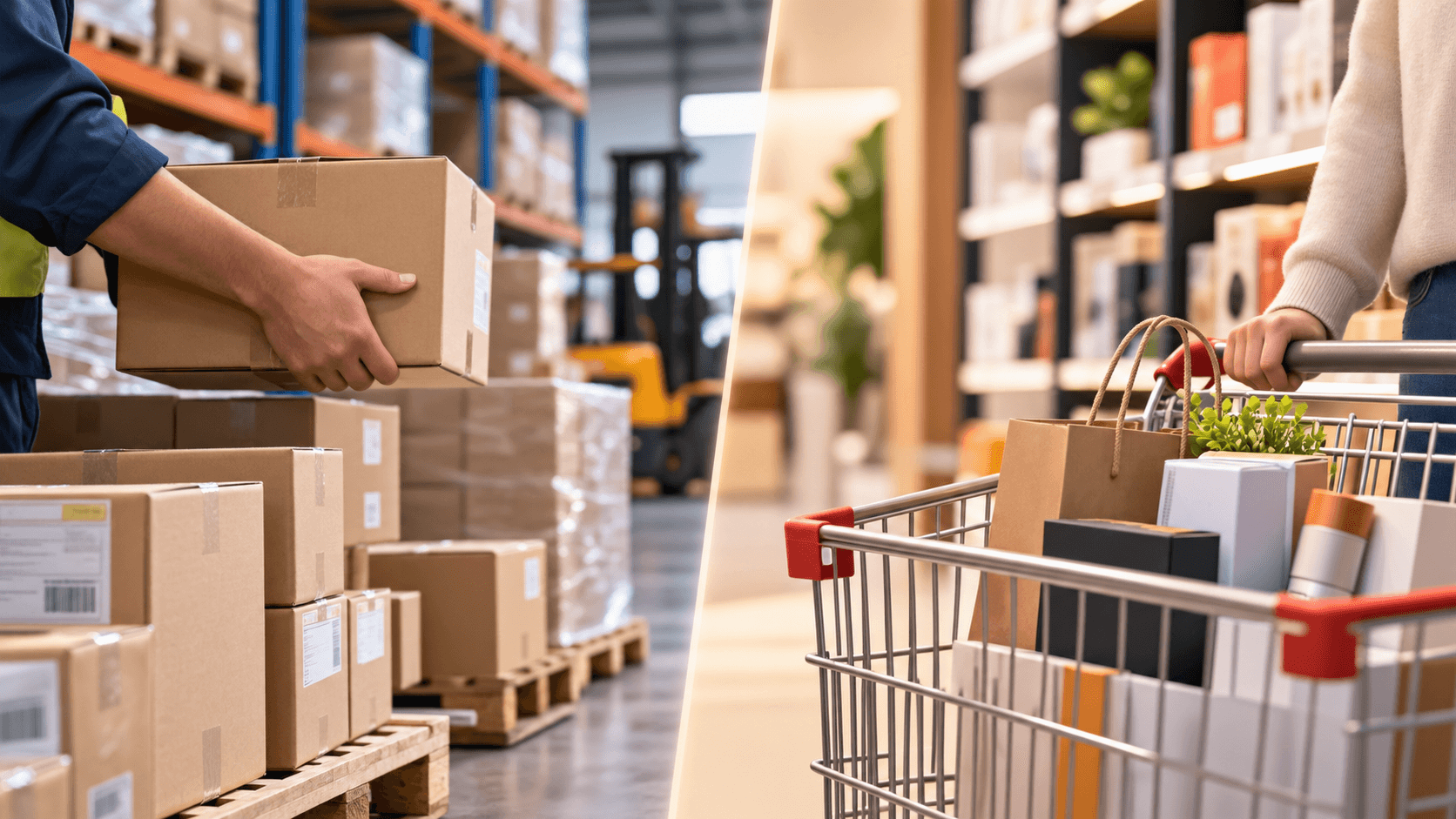
The essential wholesalers vs retailers difference is who the business is organized to serve. Wholesalers primarily move merchandise to businesses for resale, business use, or further distribution, while retailers are organized primarily around selling merchandise to the general public.
That single difference changes order size, pricing, marketing, inventory strategy, sales processes, customer service, payment terms, locations, and growth economics. The U.S. Census Bureau describes wholesale trade as an intermediate stage in product distribution and retail trade as the final stage, with retailers generally selling merchandise in smaller quantities to the public.
However, wholesalers vs retailers should not be reduced to “bulk versus single items.” A wholesale business can sometimes sell a durable commercial product as a single unit, while a retailer may sell large quantities to an individual customer. The more reliable distinction is how the company is organized, who it primarily serves, and what role it performs in the supply chain.
Wholesalers vs Retailers: The Difference at a Glance
Wholesale and retail businesses can sell identical products while running fundamentally different operations. A pallet of cleaning products sold to a janitorial company requires a different sales process, price structure, warehouse system, and customer relationship than individual packages sold through an ecommerce store.
The following wholesalers vs retailers comparison captures the main operational differences.
The table also explains why asking which side of wholesalers vs retailers has better margins produces an incomplete answer. Retail usually has a higher selling price per unit, but that does not automatically mean higher net profitability.
| Comparison | Wholesaler | Retailer |
| Primary customer | Businesses and institutions | General public |
| Typical order size | Larger | Smaller |
| Unit selling price | Usually lower | Usually higher |
| Number of transactions | Often fewer, larger transactions | Often many smaller transactions |
| Customer relationship | Account-based | Transactional or loyalty-based |
| Marketing | B2B sales and account acquisition | Consumer marketing |
| Inventory | Often deeper quantities | Often wider consumer-facing selection |
| Payment | Immediate or commercial terms | Usually immediate |
| Sales cycle | Can involve negotiation and approvals | Often minutes or days |
| Location | Warehouse, office, distribution facility, B2B ecommerce | Store, ecommerce, marketplace, direct-to-consumer |
| Product presentation | Functional, specification-focused | Consumer-facing merchandising |
| Pricing | Volume tiers, contracts, negotiated rates | Posted prices, promotions, loyalty offers |
| Delivery | Pallets, cases, commercial freight, routes | Parcel, pickup, consumer delivery |
| Main growth lever | Accounts, volume, purchasing power | Traffic, conversion, basket size, repeat purchases |
| Major risk | Inventory and receivables | Acquisition costs, inventory, returns, consumer demand |
What Is a Wholesaler?
A wholesaler purchases or otherwise arranges the sale of goods primarily for business customers. Those buyers may be retailers, contractors, restaurants, institutions, farms, manufacturers, service companies, government organizations, or other wholesalers.
The Census Bureau defines wholesale trade as an intermediate part of merchandise distribution. Merchant wholesalers generally sell goods on their own account, while another part of the sector consists of agents, brokers, and B2B electronic markets that arrange transactions rather than operating exactly like inventory-owning merchants.
A wholesaler therefore creates value by making products available in the quantities, assortment, location, timing, and commercial terms business buyers need. The strongest wholesale companies are procurement and logistics solutions, not merely businesses that receive a discount for buying boxes in bulk.
What Is a Retailer?
A retailer primarily sells goods to the general public. Retailing is the final commercial stage before the product reaches the person or household buying it for use or consumption rather than for another step of resale.
The 2022 NAICS definition from the Census Bureau makes another important point: retail is not synonymous with a physical storefront. Retailers can reach customers through stores, websites, catalogs, direct-response channels, vending, and other methods while remaining retail businesses.
This modern definition matters in any wholesalers vs retailers comparison because ecommerce has blurred the visual differences between the two. A wholesale portal and a consumer ecommerce store can look similar on screen while operating with very different customers, prices, order quantities, tax documentation, fulfillment, and sales processes.
Wholesale and Retail Are Both Enormous U.S. Markets
The wholesalers vs retailers question concerns two major parts of the U.S. economy rather than niche sales models. In July 2026, merchant wholesalers covered by the Census Bureau’s Monthly Wholesale Trade Report generated $801.3 billion in sales, up 13.0% from July 2025, and held $958.9 billion in inventories.
On the consumer-facing side, U.S. retail and food services sales reached an estimated $773.9 billion in August 2026, up 6.0% from August 2025. The figures are produced from different Census programs and should not be treated as a direct apples-to-apples market-share comparison, but they demonstrate the enormous transaction volumes on both sides of the supply chain.
Retail is also increasingly digital. U.S. ecommerce sales reached $340.2 billion in the second quarter of 2026, accounting for 17.1% of total retail sales for the quarter and rising 12.2% from Q2 2025.
Wholesalers vs Retailers: Who Is the Customer?
The customer is the foundation of the business model. Wholesalers usually sell to organizations with a commercial need, while retailers usually sell to individuals buying for personal or household use.
That changes how purchasing decisions happen. A wholesale buyer may evaluate landed cost, minimum order quantity, product specifications, payment terms, availability, lead time, freight, resale margin, reliability, warranties, and whether the supplier can support multiple locations.
Retail consumers often evaluate a different mix of factors such as price, convenience, appearance, brand, reviews, delivery speed, returns, promotions, product experience, and trust. The same product therefore requires different positioning depending on which side of wholesalers vs retailers is selling it.
Pricing Is Structured Differently
Wholesale prices generally need to leave enough economic room for another business to resell the product or use it profitably. That is why wholesalers often use volume tiers, case quantities, minimum order values, customer-specific prices, negotiated contracts, or periodic rebates.
Retailers generally post prices directly to consumers. They may still use dynamic pricing, promotions, subscriptions, loyalty discounts, bundles, memberships, or personalized offers, but buyers are usually not negotiating a 500-unit purchase agreement.
The wholesalers vs retailers pricing difference therefore reflects the purpose of the transaction. Wholesale pricing is designed around business economics and order volume, while retail pricing is designed around consumer willingness to pay, competitive positioning, and merchandising.
Does Retail Always Have a Higher Profit Margin?
No. Retailers usually sell at a higher unit price than wholesalers, but selling price is not the same as profit margin, and gross margin is not the same as net profit.
Consider a hypothetical product moving through a simple supply chain. The numbers below demonstrate the calculation rather than representing industry averages.
In this example, the retailer earns more gross profit per unit but actually has a slightly lower percentage gross margin. The retailer may also have to pay for consumer advertising, ecommerce acquisition, payment processing, individual order fulfillment, customer service, returns, retail rent, or marketplace fees.
The wholesaler has its own major expenses, including warehousing, freight, sales staff, accounts receivable, inventory financing, commercial insurance, and slower-moving stock. Consequently, a serious wholesalers vs retailers analysis should compare the entire cost structure rather than assuming retail automatically produces better margins.
| Business | Purchase cost | Selling price | Gross profit | Gross margin |
| Wholesaler | $20 | $32 | $12 | 37.5% |
| Retailer | $32 | $50 | $18 | 36.0% |
Order Size Changes Almost Everything
Wholesale businesses are generally designed around larger orders. A single customer may purchase cases, pallets, truckloads, scheduled replenishment, or repeated commercial quantities.
Retail businesses are normally designed to process smaller purchases from many individual customers. The retailer may therefore need considerably more transactions to generate the same sales volume produced by one large wholesale account.
This is one of the most important wholesalers vs retailers trade-offs. Wholesale can produce high revenue concentration in a relatively small customer base, while retail spreads sales across many buyers but requires systems capable of acquiring and serving those customers efficiently.
Customer Acquisition Works Differently
A wholesale company may build its pipeline through field sales, inside sales, trade shows, distributor relationships, cold outreach, referrals, industry associations, procurement platforms, manufacturer leads, account-based marketing, and direct relationships with purchasing departments.
Retailers operate more heavily through consumer channels. Search, paid social, marketplaces, email, stores, influencers, loyalty programs, content, consumer promotions, direct mail, and location-based traffic can all play major roles.
The economics are therefore different. A wholesaler might spend weeks winning one account that produces $200,000 in annual purchases, while a retailer could spend continuously acquiring thousands of customers whose individual annual value is much smaller.
Wholesale Sales Cycles Are Often Longer
A retail transaction can happen almost immediately. A shopper sees a product, compares options, completes payment, and receives or collects the order.
Wholesale sales can involve quotations, samples, credit applications, vendor approval, purchasing managers, contract negotiations, insurance documentation, technical specifications, minimum quantities, freight calculations, and internal approval from several people. The first order may therefore require much more selling effort than subsequent replenishment orders.
This longer sales cycle is not necessarily a disadvantage. Once a good B2B account is integrated into procurement routines, repeat purchasing can create significant lifetime value.
Inventory Strategy: Depth vs Presentation
Wholesalers often concentrate on inventory depth – having enough cases, pallets, or units available to fulfill commercial demand. Running out of a critical product can cause a business customer to lose sales or interrupt its own operations, making availability an important competitive advantage.
Retailers must also maintain availability but frequently place greater emphasis on assortment, presentation, merchandising, sizes, colors, consumer trends, and the shopping experience. Inventory decisions can therefore be more closely tied to consumer behavior and merchandising cycles.
In both wholesalers vs retailers models, slow-moving inventory damages cash flow. The difference lies in why the inventory exists and how quickly the customer expects it to turn.
Cash Flow Can Look Very Different
Retailers have one major cash-flow advantage in many transactions: consumers generally pay at the time of purchase. A retailer can receive cash or card settlement before it has to replace the sold inventory.
Wholesalers frequently operate with commercial payment terms. Valuable customers may purchase goods today and pay weeks later, which creates accounts receivable and increases the amount of working capital required to finance growth.
For example, rapid wholesale growth can create a paradox. A company may be profitable on paper while experiencing cash pressure because it must purchase more inventory immediately but will not collect customer invoices until later.
Returns Are Different Too
Consumer retail typically requires infrastructure for individual returns, exchanges, refunds, customer complaints, damaged parcels, sizing problems, and products that simply did not meet expectations. High return rates can materially change ecommerce economics even when initial sales are strong.
Wholesale returns usually arise from a different set of issues, such as damaged freight, incorrect quantities, defective merchandise, contractual return rights, discontinued products, or agreed stock rotations. Large orders make mistakes expensive even when the number of return transactions is smaller.
Both wholesalers vs retailers models therefore need clear return policies, but the operational burden is different.
Marketing a Wholesale Business
Wholesale marketing works best when it communicates business value. Buyers want to know that products will arrive when expected, pricing supports their economics, stock can be replenished, specifications are accurate, and someone will respond when a problem occurs.
Strong wholesale propositions might emphasize reliable inventory, next-day regional delivery, consolidated ordering, private-label capability, specialized expertise, lower minimums, technical support, or better procurement efficiency. The message must answer why the business buyer should move purchasing volume from an existing supplier.
Brand still matters in wholesale, but reliability and economics often carry more weight than consumer-style storytelling.
Marketing a Retail Business
Retail marketing must persuade the person who actually intends to use the product. The retailer therefore works much closer to consumer emotion, lifestyle, convenience, product experience, brand preference, social proof, and perceived value.
Retailers also control more of the final shopping experience. Store design, photography, packaging, product descriptions, merchandising, checkout, shipping, returns, loyalty programs, and customer support can directly affect conversion and repeat purchasing.
This direct consumer connection is one of the biggest strategic advantages on the retail side of wholesalers vs retailers. It also means the retailer bears more responsibility for continually generating demand.
Wholesale Can Create Larger but More Concentrated Accounts
Winning ten wholesale accounts can sometimes produce more revenue than serving thousands of small consumer transactions. That concentration makes sales and account management efficient, but it also creates risk.
If one customer represents 30% of company revenue, losing that customer can immediately affect warehouse utilization, purchasing volume, cash flow, and profitability. Wholesale businesses should therefore monitor customer concentration alongside sales growth.
Retailers can also become concentrated, particularly when they depend on one marketplace or advertising platform. In that case, the concentration is in the acquisition channel rather than in one purchasing account.
Retail Offers More Control Over the Final Price
Retailers generally control the final selling price presented to consumers, subject to supplier agreements and applicable law. This gives the retailer direct influence over promotions, bundles, merchandising, and perceived value.
Wholesalers normally sell one step earlier in the chain. They can control their own wholesale price but often cannot fully control what the downstream retailer ultimately charges consumers.
That difference can matter to brands considering wholesalers vs retailers as routes to market. Direct retail provides greater control over presentation and customer data, while wholesale can provide greater reach without requiring the brand to acquire every consumer itself.
Wholesale vs Retail Ecommerce
The growth of ecommerce does not erase the difference between wholesalers vs retailers. It simply allows both models to transact online.
B2B ecommerce can provide account-specific pricing, purchase-order workflows, quantity discounts, credit terms, multiple buyers under one organization, reorder lists, bulk uploads, contract catalogs, and freight calculations. Retail ecommerce focuses more heavily on consumer browsing, discovery, individual checkout, promotions, reviews, parcel fulfillment, and easy returns.
The technology may look similar from the outside, but the workflow behind the screen is fundamentally different.
Can One Company Be Both a Wholesaler and a Retailer?
Yes. A business can sell cases to independent stores at wholesale prices while simultaneously selling individual units through its own website or physical store.
This hybrid model can create major advantages. Wholesale expands distribution through other businesses, while direct retail gives the company consumer data, higher selling prices, control over merchandising, and a direct relationship with the end customer.
However, the combination can create channel conflict. Retail partners may object if the supplier sells directly to consumers at prices that undercut them, especially after those retailers invested in marketing and inventory.
A Simple Hybrid Model Example
Consider a specialty skincare brand that manufactures or sources its own products. It might sell a case of 24 units to independent beauty stores at a wholesale price while selling individual products directly through its ecommerce site at the recommended retail price.
The wholesale channel gives the brand access to physical stores and customer audiences it does not have to acquire directly. Retail generates direct consumer feedback and potentially more gross profit per unit, although the business also assumes advertising, fulfillment, customer service, and returns.
The question is therefore not always wholesalers vs retailers as an either-or choice. For some companies, the strongest model is a carefully managed combination of both channels.
Wholesalers vs Retailers: Which Model Needs More Capital?
Neither side automatically wins. A wholesaler often needs substantial capital because large purchase quantities, warehouses, commercial vehicles, customer credit, and accounts receivable can absorb cash.
A retailer can sometimes start with less inventory, especially online, but stores can require leases, fixtures, payroll, displays, point-of-sale systems, insurance, and inventory before meaningful revenue begins. Consumer ecommerce also introduces advertising and fulfillment costs that can scale quickly.
Capital requirements therefore depend more on category, inventory velocity, facilities, logistics, and payment timing than on whether the company identifies as wholesale or retail.
When a Wholesale Business Model Makes More Sense
Wholesale works particularly well when the business can access products at competitive prices and has a clear path to recurring B2B demand. Strong wholesale opportunities often exist where customers need frequent replenishment, specialized sourcing, consolidated purchasing, local availability, reliable delivery, or products that are difficult to source individually.
Examples include packaging, janitorial products, foodservice supplies, industrial components, electrical supplies, building materials, specialty foods, professional beauty products, medical supplies, automotive parts, and numerous other business inputs.
A wholesale model is especially attractive when each acquired account can place repeated orders without requiring the company to win the end consumer every time.
When a Retail Business Model Makes More Sense
Retail makes more sense when the business has a strong reason to own the customer relationship. That could be distinctive branding, a unique shopping experience, strong consumer demand generation, expertise, convenience, exclusive products, personalization, community, or a particularly effective ecommerce channel.
Retail is also attractive when consumers are willing to pay substantially more than the price available through intermediate distribution channels. Keeping the retail transaction in-house allows the company to capture that revenue, but only after absorbing the additional costs associated with reaching and serving the consumer.
The model is therefore most attractive when the company has an advantage in consumer acquisition or customer experience rather than merely access to a product.
Wholesalers vs Retailers: What Should a New Business Compare?
A founder choosing between wholesalers vs retailers should model the economics before ordering substantial inventory. The decision should include far more than estimated selling price.
Compare expected order value, gross margin, customer-acquisition cost, purchasing minimums, warehouse requirements, fulfillment cost, freight, returns, payment timing, customer concentration, inventory turnover, software, sales staffing, insurance, and the cash required to support growth.
The most important calculation may be how long each dollar remains tied up. A business that repeatedly turns inventory and collects quickly can outperform a model with a seemingly attractive margin but slow sales and long payment cycles.
The Difference That Really Changes the Business Model
The defining wholesalers vs retailers difference is ultimately the relationship with the buyer. Wholesalers optimize their businesses around other organizations, while retailers optimize around the final consumer.
That distinction flows through nearly every major business decision – purchasing, inventory, pricing, sales, marketing, credit, fulfillment, locations, technology, staffing, and cash flow. The two businesses may sell the exact same box, but they are solving different customer problems.
For entrepreneurs and product companies, the strongest model is the one in which the company has a genuine competitive advantage. Wholesale rewards efficient procurement, reliable fulfillment, account relationships, and volume; retail rewards consumer demand, merchandising, conversion, experience, and loyalty.
FAQ
The primary difference is the customer and the role in the supply chain. Wholesalers mainly supply other businesses, while retailers mainly sell merchandise to the general public.
The Census Bureau describes wholesale trade as an intermediate stage in distribution and retail as the final stage before merchandise reaches the public. This distinction remains useful even as both types of companies increasingly sell online.
No. Large-volume purchasing is strongly associated with wholesale, but quantity alone does not determine whether a transaction is wholesale.
The Census Bureau notes that durable nonconsumer goods such as certain types of commercial machinery can be part of wholesale trade even when sold as single units. The nature of the customer and business activity is therefore more important than an arbitrary minimum quantity.
Yes. A retailer may buy from a wholesaler, distributor, importer, manufacturer, or combination of suppliers.
Large retailers can also operate their own distribution systems. In food, for example, USDA identifies self-distributing retailers as a distinct model in which large supermarket organizations operate distribution centers rather than relying entirely on independent wholesalers.
There is no universal answer. Retailers often receive a higher selling price per unit, while wholesalers may generate substantial sales from larger and more frequent B2B orders.
Profitability depends on gross margin, volume, inventory turnover, operating expenses, customer-acquisition costs, freight, returns, labor, financing, bad debt, and many other variables. Comparing wholesalers vs retailers based only on selling price can therefore lead to the wrong conclusion.
Ecommerce can be either. A website selling primarily to consumers can be retail, while an online portal serving business buyers with commercial quantities, account pricing, or purchasing workflows can operate as wholesale.
U.S. retail ecommerce itself is now substantial: Census estimated Q2 2026 retail ecommerce sales at $340.2 billion, representing 17.1% of total retail sales for the quarter.
Yes. Many businesses operate hybrid models and sell to both business customers and consumers.
The challenge is channel management. Wholesale partners need sufficient economics to resell profitably, so aggressive direct-to-consumer discounting can create conflict between the retail and wholesale channels.
Wholesale can scale efficiently when large customers reorder regularly, but growth may require substantial inventory and working capital. Retail can reach a large national audience through ecommerce, but growth may increase advertising, fulfillment, returns, customer-service, and technology costs.
The better scaling model depends on the company’s advantage. A strong B2B sales organization may scale wholesale more effectively, while a business with a powerful consumer brand may have more leverage in retail.
A new business should choose based on customer access rather than assuming one model is easier. If the founders already know buyers, understand procurement, and can source products competitively, wholesale may provide a clear path to recurring orders.
If the company understands consumer acquisition, branding, merchandising, and direct fulfillment, retail may make more sense. A limited pilot can test either model before the company commits heavily to inventory, facilities, or staff.
Frequently Asked Questions
- What is the main difference between wholesalers and retailers?
- The primary difference is the customer and the role in the supply chain. Wholesalers mainly supply other businesses, while retailers mainly sell merchandise to the general public. The Census Bureau describes wholesale trade as an intermediate stage in distribution and retail as the final stage before merchandise reaches the public. This distinction remains useful even as both types of companies increasingly sell online.
- Do wholesalers always sell in bulk?
- No. Large-volume purchasing is strongly associated with wholesale, but quantity alone does not determine whether a transaction is wholesale. The Census Bureau notes that durable nonconsumer goods such as certain types of commercial machinery can be part of wholesale trade even when sold as single units. The nature of the customer and business activity is therefore more important than an arbitrary minimum quantity.
- Do retailers buy directly from manufacturers?
- Yes. A retailer may buy from a wholesaler, distributor, importer, manufacturer, or combination of suppliers. Large retailers can also operate their own distribution systems. In food, for example, USDA identifies self-distributing retailers as a distinct model in which large supermarket organizations operate distribution centers rather than relying entirely on independent wholesalers.
- Which makes more money, wholesalers or retailers?
- There is no universal answer. Retailers often receive a higher selling price per unit, while wholesalers may generate substantial sales from larger and more frequent B2B orders. Profitability depends on gross margin, volume, inventory turnover, operating expenses, customer-acquisition costs, freight, returns, labor, financing, bad debt, and many other variables. Comparing wholesalers vs retailers based only on selling price can therefore lead to the wrong conclusion.
- Is ecommerce wholesale or retail?
- Ecommerce can be either. A website selling primarily to consumers can be retail, while an online portal serving business buyers with commercial quantities, account pricing, or purchasing workflows can operate as wholesale. U.S. retail ecommerce itself is now substantial: Census estimated Q2 2026 retail ecommerce sales at $340.2 billion, representing 17.1% of total retail sales for the quarter.
- Can a company sell wholesale and retail at the same time?
- Yes. Many businesses operate hybrid models and sell to both business customers and consumers. The challenge is channel management. Wholesale partners need sufficient economics to resell profitably, so aggressive direct-to-consumer discounting can create conflict between the retail and wholesale channels.
- Is wholesale easier to scale than retail?
- Wholesale can scale efficiently when large customers reorder regularly, but growth may require substantial inventory and working capital. Retail can reach a large national audience through ecommerce, but growth may increase advertising, fulfillment, returns, customer-service, and technology costs. The better scaling model depends on the company’s advantage. A strong B2B sales organization may scale wholesale more effectively, while a business with a powerful consumer brand may have more leverage in retail.
- What is better for a new business: wholesale or retail?
- A new business should choose based on customer access rather than assuming one model is easier. If the founders already know buyers, understand procurement, and can source products competitively, wholesale may provide a clear path to recurring orders. If the company understands consumer acquisition, branding, merchandising, and direct fulfillment, retail may make more sense. A limited pilot can test either model before the company commits heavily to inventory, facilities, or staff.
Written by

James Cole
James Cole is a wholesale operator who has run distribution P&Ls through first-warehouse launch, inventory turns, trade credit, and EDI-backed accounts.
Published October 5, 2026
