Sourcing
Distributor vs Wholesaler: How Margins, Inventory, Control, and Growth Really Differ
Distributor vs Wholesaler: How Margins, Inventory, Control, and Growth Really Differ
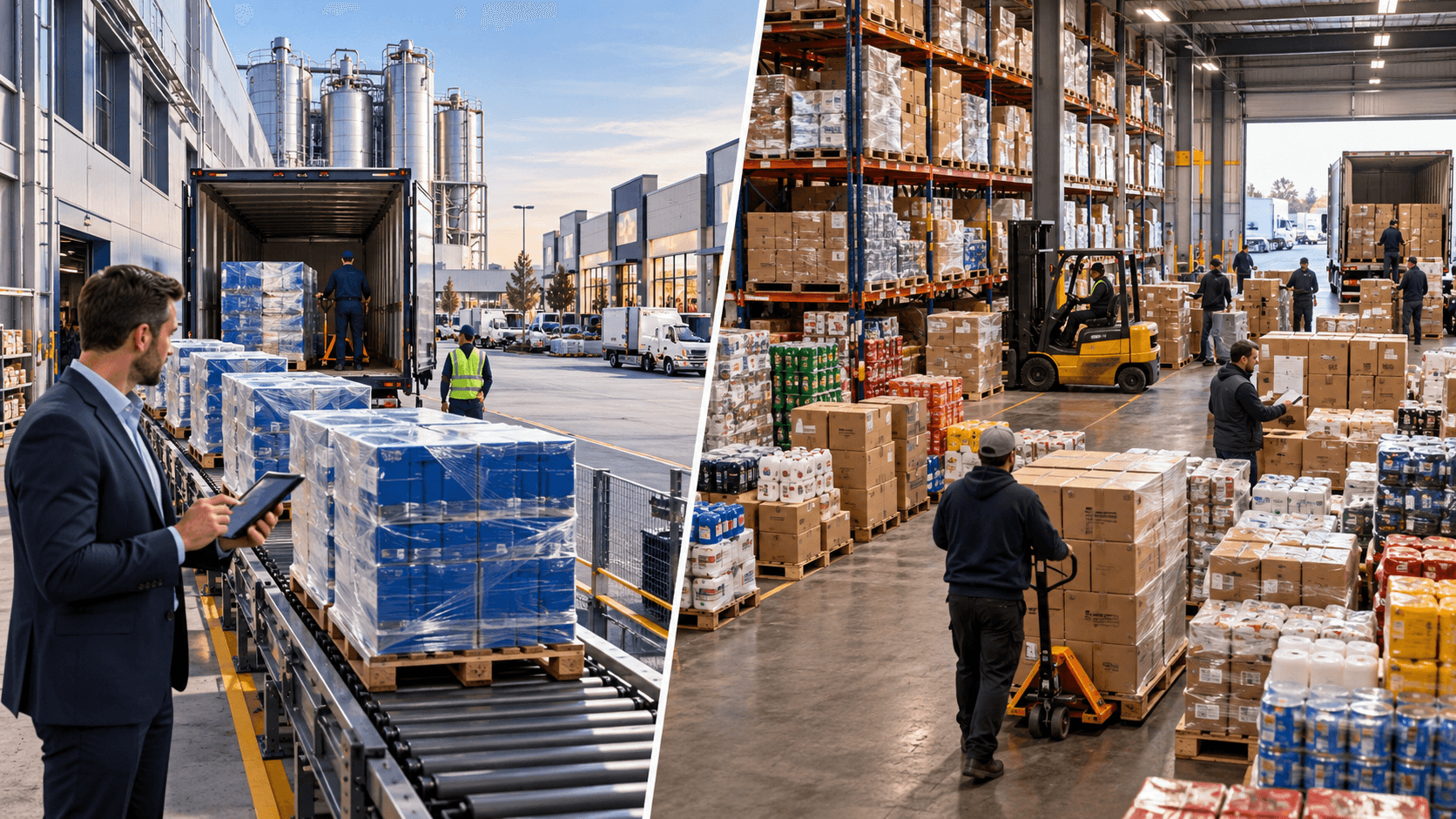
The distributor vs wholesaler difference is not as simple as “a distributor buys from manufacturers while a wholesaler sells to retailers.” In everyday business use, distributors often maintain closer relationships with manufacturers, may receive defined territories or product rights, and can take responsibility for sales development, technical support, marketing, or dealer recruitment. Wholesalers are more commonly built around purchasing and reselling products efficiently across multiple brands and business customers.
There is also an important technical distinction that many distributor vs wholesaler explanations miss: U.S. government statistics do not treat distributors and wholesalers as mutually exclusive categories. The U.S. Census Bureau includes distributors, wholesale merchants, jobbers, drop shippers, and import/export merchants within merchant wholesale trade when they sell goods on their own account.
That overlap matters because the real distributor vs wholesaler question is usually about the operating model rather than a title on a business card. A company deciding between the two must think about supplier dependence, assortment, working capital, contracts, inventory, territory, sales responsibilities, and how much of the market-development burden it wants to carry.
Distributor vs Wholesaler: The Difference in 30 Seconds
A distributor typically builds a deeper relationship with one or more manufacturers and helps move those products through a market or territory. A wholesaler generally focuses more heavily on buying goods for resale and supplying other businesses efficiently, often across products from many manufacturers.
Neither description is universal, however. Census classifications demonstrate that a distributor can also be a merchant wholesaler, while GS1 US describes both wholesalers and distributors as intermediaries that buy products from vendors or manufacturers and help move those products through the supply chain.
The distributor vs wholesaler distinction therefore affects much more than where a company purchases products. It changes the type of supplier agreement the business may need, how salespeople work, what inventory is carried, and how much responsibility the intermediary accepts for developing demand.
| Comparison | Distributor | Wholesaler |
| Typical supplier relationship | Often closer and more structured | Often more transactional |
| Primary source of goods | Commonly manufacturers or brands | Manufacturers, distributors, importers, other wholesalers |
| Number of brands | May focus on fewer brands | Often broader assortment |
| Territory | May have geographic or market rights | Usually less dependent on protected territory |
| Exclusivity | Possible in some agreements | Less central to the model |
| Marketing responsibility | Can be significant | Usually focused on selling available inventory |
| Sales development | May recruit dealers or open markets | Usually sells to existing business buyers |
| Technical/product support | Common in some industries | Less common |
| Inventory ownership | Often | Often |
| Warehouse required | Depends on model | Common but not universal |
| Main customer | Wholesalers, dealers, retailers, institutions, businesses | Retailers, businesses, institutions, other resellers |
| Growth driver | More territory, brands, dealers, market share | More accounts, SKUs, purchasing volume, inventory turns |
| Main dependency | Supplier relationship | Purchasing efficiency and customer demand |
Why Distributor and Wholesaler Are Often Confused
The confusion exists because both businesses occupy the middle of the supply chain. Both may buy products, hold inventory, operate warehouses, sell B2B, break large quantities into smaller orders, coordinate logistics, and earn money from the spread between acquisition cost and resale revenue.
Official classifications reinforce that overlap. The Census Bureau defines wholesale trade as an intermediate stage in merchandise distribution and explicitly includes businesses known as distributors among establishments selling goods on their own account. Wholesale businesses generally serve other companies rather than the general public.
Therefore, distributor vs wholesaler is best understood as a spectrum of business relationships. At one end is a highly manufacturer-aligned distributor with a contract, territory, targets, service requirements, and a narrow product portfolio. At the other is a broad-line wholesaler buying thousands of SKUs from numerous sources and competing mainly through availability, price, assortment, credit, and delivery.
How a Distributor Business Model Works
A distributor usually positions itself between a manufacturer and downstream business customers. Depending on the industry, those customers may be wholesalers, dealers, contractors, retailers, service companies, restaurants, hospitals, industrial facilities, or other organizations.
What separates the distributor side of the distributor vs wholesaler comparison is frequently the depth of the upstream relationship. A manufacturer may expect the distributor not only to purchase inventory but also to build the brand in an assigned market, train resellers, maintain stock, provide technical knowledge, forecast demand, support warranty processes, or meet minimum sales volumes.
A distribution agreement can consequently become a valuable business asset, but it can also create obligations. A distributor that depends heavily on one manufacturer faces greater supplier concentration risk if terms change, territory rights disappear, supply becomes unreliable, or the manufacturer begins selling through another channel.
How a Wholesaler Business Model Works
A wholesaler is generally optimized around sourcing products and reselling them to businesses. The wholesaler may purchase directly from manufacturers, from distributors, from importers, or from other wholesalers depending on product category and market structure.
The U.S. Census Bureau defines a wholesaler as a business selling to retailers, contractors, farms, or other businesses rather than selling to the general public in significant amounts. Wholesale operations commonly use warehouses or offices rather than consumer-focused storefronts and are structured around B2B buying relationships.
In the distributor vs wholesaler comparison, a wholesaler normally has more freedom to build an assortment around buyer demand. Instead of developing one manufacturer’s market, the company can offer competing brands, complementary products, or a wide catalog that makes procurement easier for customers.
The Biggest Difference Is Often the Manufacturer Relationship
The supplier relationship is one of the clearest practical differences between distributor vs wholesaler models. A distributor may function almost like an extension of a manufacturer’s sales channel, while a wholesaler more often acts as an independent merchant deciding which products make commercial sense to carry.
Imagine a manufacturer of commercial water pumps entering three new states. It could appoint a regional distributor responsible for stocking pumps, developing dealer relationships, training installers, generating forecasts, and helping customers select the correct equipment. The distributor may receive favorable pricing or territory protection in exchange for those responsibilities.
A broad industrial wholesaler could also sell the same pumps, but its role may be very different. It might stock pumps from six manufacturers alongside valves, hoses, fittings, tools, and other products, giving contractors a convenient place to consolidate orders rather than representing one manufacturer particularly closely.
Distributor vs Wholesaler: Who Buys From Whom?
There is no universal sequence that every product follows. A traditional chain may look like manufacturer → distributor → wholesaler → retailer → consumer, but many industries eliminate one or more stages.
A distributor may sell directly to retailers. A wholesaler may buy directly from the manufacturer. Large retailers may operate their own distribution centers, while manufacturers may maintain sales branches and bypass independent distributors entirely.
USDA data on food wholesaling illustrate how varied these structures can become. The agency identifies merchant wholesalers, manufacturer-operated sales branches and offices, agents and brokers, broad-line wholesalers, specialty wholesalers, self-distributing retailers, and system distributors as different mechanisms used to move food through the market.
The practical rule is therefore straightforward: do not choose a distributor vs wholesaler model based on a textbook diagram alone. Map the actual supply chain in the product category being considered.
Distributor vs Wholesaler Pricing and Margins
It is tempting to say that distributors receive lower prices or that wholesalers make smaller margins, but neither claim is reliable across industries. Pricing can depend on order volume, purchasing commitments, territory, freight, rebates, payment terms, exclusivity, supplier competition, product scarcity, and the services included in the agreement.
Gross margin should also not be confused with markup. If a business purchases an item for $60 and resells it for $75, the gross profit is $15, the markup on cost is 25%, while gross margin is 20% of the selling price.
The more useful distributor vs wholesaler question is what the margin must pay for. A distributor may need sales representatives, demonstrations, technical support, dealer development, marketing, warranty coordination, and larger safety stocks. A wholesaler may have fewer brand-development responsibilities but carry thousands of SKUs, operate high-throughput warehouses, extend customer credit, and compete aggressively on price and availability.
Consider a hypothetical product with a manufacturer transfer price of $50. The numbers below are illustrative rather than industry benchmarks.
The example does not mean distributors normally earn 23.1% or wholesalers 13.3%. Its purpose is to show why comparing distributor vs wholesaler margins without understanding each company’s operating expenses can be misleading.
A wholesaler earning $10 per unit across a 500-unit order generates $5,000 of gross profit from one transaction. A distributor earning more per unit may still carry substantially higher sales, support, financing, and inventory costs.
| Stage | Buy price | Sell price | Gross profit | Gross margin |
| Distributor | $50 | $65 | $15 | 23.1% |
| Wholesaler | $65 | $75 | $10 | 13.3% |
| Retailer | $75 | $100 | $25 | 25.0% |
Inventory Changes the Economics of Both Models
Inventory is one of the largest financial issues in both distributor vs wholesaler models. In July 2026, U.S. merchant wholesalers covered by the Census Bureau’s Monthly Wholesale Trade Report held $958.9 billion in inventories, while monthly sales totaled $801.3 billion. The inventories-to-sales ratio was 1.20.
Those national numbers demonstrate the scale of capital tied up in wholesale commerce, although they are not startup benchmarks for an individual company. Inventory creates availability and service advantages, but it also absorbs cash and introduces risks from obsolescence, damage, expiration, demand shifts, price reductions, and supplier changes.
A distributor may be required to maintain certain stock levels under a manufacturer agreement. A wholesaler may have more purchasing freedom but face pressure to maintain a broad enough assortment that customers can consolidate orders instead of buying from multiple suppliers.
Territory and Exclusivity Can Change the Distributor Model
A protected territory can make a distribution agreement attractive because it reduces direct competition from distributors representing the same manufacturer within that defined area. However, exclusivity should never be assumed simply because a company is called a distributor.
Agreements may be exclusive, nonexclusive, product-specific, channel-specific, customer-specific, or geographically limited. They may also include performance requirements, annual purchase commitments, reporting duties, marketing obligations, inventory minimums, restrictions on competing products, and conditions under which the agreement can be terminated.
This is another reason the distributor vs wholesaler distinction matters operationally. A wholesaler normally builds more of its competitive position around its customer base, assortment, purchasing power, availability, and logistics, while a distributor may derive significant value from contractual access to a particular manufacturer or territory.
Sales Responsibilities Are Often Much Heavier for Distributors
A wholesaler needs an effective sales organization, but the selling objective is usually straightforward: generate profitable orders from the available assortment. The company may run inside sales, field sales, ecommerce ordering, account management, purchasing programs, and customer-specific pricing.
A distributor can have an additional responsibility – creating demand for the manufacturer’s products, not simply fulfilling existing demand. This can involve dealer recruitment, product demonstrations, technical training, trade shows, specification support, market development, lead generation, and helping downstream sellers understand the product.
That difference can materially change payroll and customer-acquisition costs. A distributor vs wholesaler analysis should therefore compare required sales effort per dollar of gross profit rather than simply comparing purchase and resale prices.
Who Has More Control Over the Product Line?
Wholesalers generally have greater freedom over assortment because the business can source products from many suppliers. If one product becomes uncompetitive, the wholesaler may be able to expand another brand or replace the SKU entirely.
A distributor tied closely to a manufacturer may have less assortment freedom but more influence within that manufacturer relationship. Strong distributors can gain early access to new products, better support, cooperative marketing, leads, training, or defined territory rights.
The trade-off in distributor vs wholesaler is therefore independence versus relationship depth. Neither side is automatically better; the right model depends on where the company expects to build its durable advantage.
Which Model Requires More Working Capital?
Both models can become capital-intensive. Inventory, accounts receivable, freight, warehouse leases, payroll, insurance, software, damaged stock, customer returns, and supplier deposits can all consume cash before customers pay.
A distributor with minimum purchase commitments may be especially exposed when demand grows more slowly than expected. A wholesaler with a broad catalog can face a different problem: modest quantities across thousands of SKUs can collectively tie up a large amount of working capital.
Payment terms also matter. A business that pays suppliers in 30 days but allows major customers 60-day terms may grow revenue while simultaneously creating a cash-flow problem.
Distributor vs Wholesaler: Which Is Easier to Start?
A small wholesale operation can sometimes be easier to test because it does not necessarily require a formal manufacturer appointment. The founder may begin with a narrow assortment, a small group of business customers, limited inventory, and purchasing relationships that expand as order volume grows.
Becoming an authorized distributor can have a higher relationship barrier. Manufacturers may want evidence of capital, industry experience, warehouse capacity, existing accounts, sales coverage, technical expertise, territory knowledge, or minimum purchasing capability before granting distributorship rights.
However, the opposite can occur in highly specialized markets. A manufacturer trying to enter an underserved territory may actively seek a capable small distributor, while a new general wholesaler could struggle to compete against established businesses with stronger purchasing power.
Can a Company Be Both a Distributor and a Wholesaler?
Yes, and this is where many simplified distributor vs wholesaler articles become misleading. A company can distribute certain manufacturers under structured agreements while wholesaling products from numerous other brands.
The Census Bureau’s classification makes this overlap particularly clear because distributors selling goods on their own account are included within merchant wholesale trade.
A business might therefore describe itself as an authorized distributor when discussing one manufacturer relationship and as a wholesale supplier when describing its broader market role. The exact label matters less than the actual contractual, inventory, sales, and service obligations behind it.
Distributor vs Wholesaler: Main Risks to Compare
Before selecting either model, the business should analyze the risks that can affect cash flow and long-term control.
Supplier concentration: How much revenue depends on one manufacturer?
Customer concentration: Would losing the largest account materially damage the business?
Inventory exposure: How quickly can products become obsolete, seasonal, damaged, or unsellable?
Territory dependence: Can a valuable distributorship be reassigned or made nonexclusive?
Working capital: How long is cash tied up between purchasing inventory and collecting customer payments?
Margin pressure: Can competitors source equivalent products more cheaply?
Operational complexity: Does the product require cold storage, hazardous handling, technical service, installation, certification, or specialized freight?
Channel conflict: Does the supplier also sell directly to the same customers?
Credit risk: How much revenue is sold on terms rather than collected immediately?
Scalability: Does growth require proportionally more inventory, warehouse space, drivers, or salespeople?
These questions are more useful than asking whether a distributor vs wholesaler model is “more profitable.” Profitability comes from how well the company controls these variables, not from the label alone.
When the Distributor Model Makes More Sense
A distributor model can be attractive when the founder understands a specific industry, has relationships with downstream buyers, and can help a manufacturer enter or expand within a market. It becomes particularly compelling when the agreement creates something difficult for competitors to reproduce, such as territory rights, specialized expertise, certifications, technical service capability, or access to a desirable product line.
The model also makes sense when buyers need support beyond simple fulfillment. Industrial equipment, specialized components, commercial technology, medical products, foodservice categories, and other technical markets can require meaningful education and sales support between manufacturing and final use.
The key question is whether the value created through the manufacturer relationship justifies the additional obligations and dependency.
When the Wholesaler Model Makes More Sense
Wholesaling can be more attractive when customers value assortment, price, availability, purchasing convenience, and logistics more than allegiance to one manufacturer. A wholesaler can create value by allowing a retailer, contractor, restaurant, institution, or other business to buy many products through one account.
This model can also diversify supplier risk. Losing one brand can still be painful, but a broad wholesaler may have alternatives if its customer relationships and procurement network are strong.
The strongest wholesaler is not simply a business that purchases large quantities. Its advantage usually comes from making procurement easier, faster, more reliable, or less expensive for the buyer.
How to Choose Between Distributor vs Wholesaler
The best starting point is not the title the company wants to use. It is the position in the supply chain where the business can create enough value to protect its margin.
A founder considering distributor vs wholesaler should examine the source of competitive advantage, required capital, supplier access, buyer relationships, inventory turnover, expected sales responsibilities, and contractual dependence. A company with deep knowledge of one technical product category may be suited to distribution, while a company with superior purchasing and logistics across many products may be better positioned for wholesale.
The decision should ultimately answer one question: is the company primarily building value around a manufacturer relationship or around its own procurement and customer network?
FAQ
Not exactly, although the terms overlap. In common business usage, distributors often maintain deeper relationships with manufacturers and may handle territory development, marketing, technical support, or dealer networks, while wholesalers tend to focus more on purchasing and reselling goods to business customers.
Official U.S. industry classification is broader than that everyday distinction. The Census Bureau includes distributors among merchant wholesalers, which means a distributor can also be classified as a wholesaler.
A wholesaler can buy from a distributor, but it does not have to. Depending on the industry, wholesalers may purchase directly from manufacturers, importers, distributors, or other wholesalers.
The actual channel depends on manufacturer policy, purchasing volume, geography, product complexity, and the economics of the supply chain. Large wholesalers may have enough purchasing power to buy directly where smaller companies cannot.
Yes. A distributor does not necessarily need a wholesaler between itself and the retailer, and many supply chains move directly from manufacturer to distributor to retailer.
Some distributors also sell to dealers, contractors, institutions, service businesses, or other end-user organizations. The customer structure depends heavily on the product and industry.
Not necessarily. A distributor may have advantageous manufacturer pricing, but its selling price also reflects service, logistics, territory responsibilities, order size, credit, support, and commercial terms.
A wholesaler with large purchasing volume may sometimes offer lower prices on particular products. Price therefore cannot be predicted from the distributor vs wholesaler label alone.
No. Some distribution agreements provide exclusive geographic, customer, product, or channel rights, while others are completely nonexclusive.
The rights depend on the actual contract with the manufacturer. A business should never assume exclusivity merely because it has been appointed as a distributor.
Both models can scale substantially, but they scale differently. A distributor may expand by winning additional territories, manufacturers, dealer relationships, or product lines, while a wholesaler may grow by adding customers, purchasing volume, warehouses, categories, and distribution capacity.
In both cases, inventory turnover and working capital can become more important as revenue grows. Scaling sales faster than the company can finance stock and receivables can create financial pressure even when demand is strong.
Frequently Asked Questions
- Is a distributor the same as a wholesaler?
- Not exactly, although the terms overlap. In common business usage, distributors often maintain deeper relationships with manufacturers and may handle territory development, marketing, technical support, or dealer networks, while wholesalers tend to focus more on purchasing and reselling goods to business customers. Official U.S. industry classification is broader than that everyday distinction. The Census Bureau includes distributors among merchant wholesalers, which means a distributor can also be classified as a wholesaler.
- Does a wholesaler buy from a distributor?
- A wholesaler can buy from a distributor, but it does not have to. Depending on the industry, wholesalers may purchase directly from manufacturers, importers, distributors, or other wholesalers. The actual channel depends on manufacturer policy, purchasing volume, geography, product complexity, and the economics of the supply chain. Large wholesalers may have enough purchasing power to buy directly where smaller companies cannot.
- Can a distributor sell directly to retailers?
- Yes. A distributor does not necessarily need a wholesaler between itself and the retailer, and many supply chains move directly from manufacturer to distributor to retailer. Some distributors also sell to dealers, contractors, institutions, service businesses, or other end-user organizations. The customer structure depends heavily on the product and industry.
- Is a distributor cheaper than a wholesaler?
- Not necessarily. A distributor may have advantageous manufacturer pricing, but its selling price also reflects service, logistics, territory responsibilities, order size, credit, support, and commercial terms. A wholesaler with large purchasing volume may sometimes offer lower prices on particular products. Price therefore cannot be predicted from the distributor vs wholesaler label alone.
- Do distributors always have exclusive territories?
- No. Some distribution agreements provide exclusive geographic, customer, product, or channel rights, while others are completely nonexclusive. The rights depend on the actual contract with the manufacturer. A business should never assume exclusivity merely because it has been appointed as a distributor.
- Which is more scalable, a distributor or a wholesaler?
- Both models can scale substantially, but they scale differently. A distributor may expand by winning additional territories, manufacturers, dealer relationships, or product lines, while a wholesaler may grow by adding customers, purchasing volume, warehouses, categories, and distribution capacity. In both cases, inventory turnover and working capital can become more important as revenue grows. Scaling sales faster than the company can finance stock and receivables can create financial pressure even when demand is strong.
Written by

James Cole
James Cole is a wholesale operator who has run distribution P&Ls through first-warehouse launch, inventory turns, trade credit, and EDI-backed accounts.
Published October 4, 2026
